


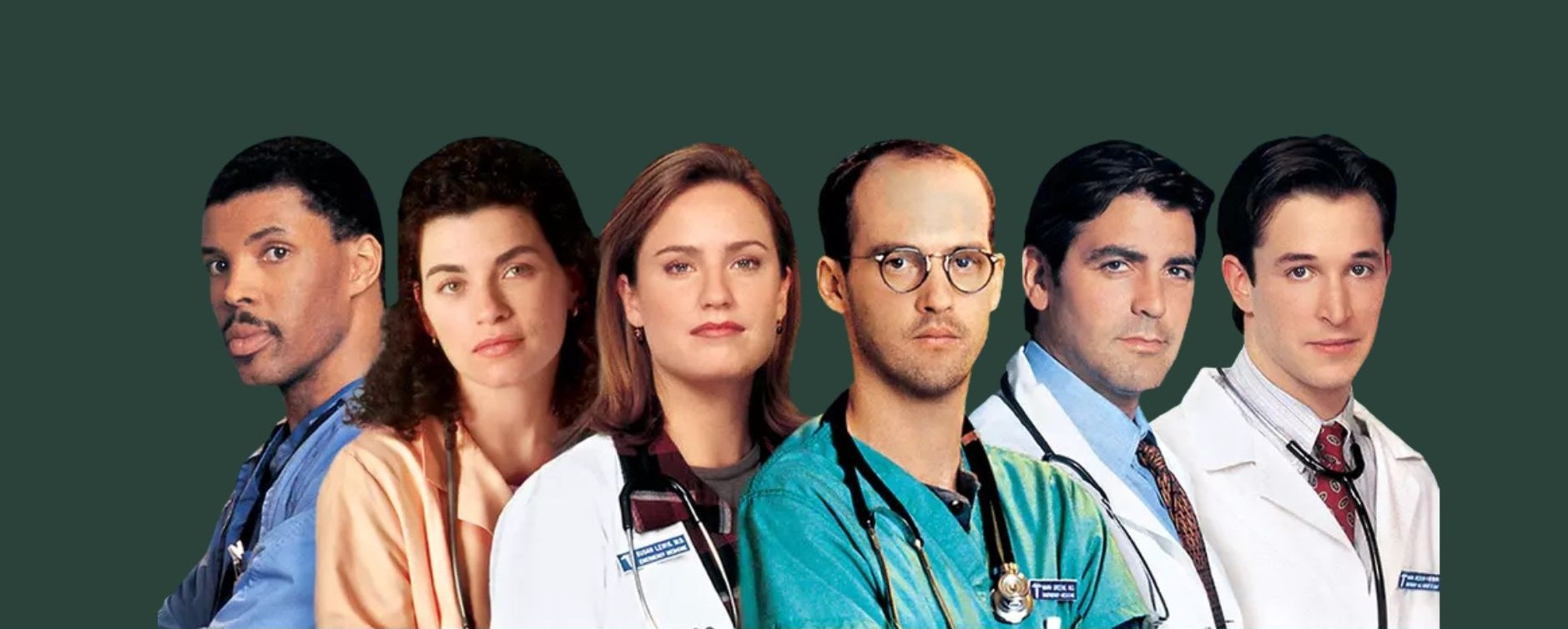
I have watched too many medical dramas. ER, Grey’s Anatomy, The Resident. Hundreds of hours of fictional doctors treating fictional patients with very real depictions of pain.
At first, I watched for the drama. I guess we all watch it for the relationships, the crises, and the life-and-death stakes. Over time, I started noticing patterns in pain itself, in how it works, in how people experience it, and in how the best doctors approach it.
Three lessons emerged that changed how I think about suffering, not just physical pain but all kinds (most of them).
First lesson: Pain and injury aren’t the same thing.
There’s an episode in ER where a patient comes in screaming, convinced they’re dying. They are in full panic mode. Maximum pain scale. The doctors rush through tests and find… nothing serious—a minor issue causing disproportionate pain.
Later in the same episode, someone calmly walks in to report mild discomfort. They’ve been shot, and the bullet is still in them. They’re experiencing catastrophic injury with minimal pain because adrenaline and shock are masking it.
The doctors treat both, but they trust the injury assessment more than the pain report.
That distinction was revelatory: pain is your nervous system’s interpretation, not an objective measure of damage. Occasionally, the interpretation is accurate, but more often, it’s wildly miscalibrated.
I had always assumed pain was information about how bad something was. Still, pain is information about how threatened your nervous system feels, which is related to actual threat but not identical to it.
You can have enormous pain with a minor injury, which means that your system is overreacting, and you can have minimal pain with a serious injury, which translates to the fact that your system is underreacting or overwhelmed.
This matters because we treat pain as truth. “It hurts this much; therefore, it must be this bad.”
Pain is just a signal, and signals can be wrong.
When I’m experiencing emotional or creative pain, the agony of criticism, the suffering of failure, or the torment of feeling stuck, now I start asking: Is this pain proportional to the actual injury, or is my system overreacting?
Often, it’s overreacting. The criticism hurt, but it didn’t destroy me. The failure stung, but it didn’t end my career. I am now aware that my nervous system treated it like a catastrophe when it was actually just a difficulty.
Separating the pain from the actual damage helps me respond appropriately. Yes, this hurts, but no, I’m not actually dying.
Second lesson: Untreated pain makes everything worse.
In medical shows, there’s always a moment where someone refuses pain medication. They use any excuse, but the most common are “I need to stay alert” and “I can handle it.”
The experienced doctors almost always push back: untreated pain isn’t noble. It’s counterproductive.
When you’re in severe pain, your body diverts resources to managing that pain. Your thinking gets clouded. Your decision-making deteriorates. Your body tenses, which typically makes the underlying problem worse. Pain creates a cascade of secondary problems.
Treating pain isn’t just about comfort but about preventing pain from creating additional damage.
I had absorbed the cultural message that enduring pain was virtuous, that suffering without complaint was strength, and that asking for relief was a weakness. But watching doctors treat pain as a medical priority rather than a moral test reframed it entirely.
Pain that’s left untreated doesn’t just hurt; it impairs your ability to heal from whatever caused it.
When I’m in emotional pain, grief, disappointment, or heartbreak, leaving it untreated doesn’t make me stronger. It makes me less functional. The pain itself becomes an additional problem, separate from the original wound.
Treating pain isn’t avoiding the real issue, but preventing pain from compounding the issue.
That might mean talking to someone, taking a break, or doing something that provides relief. This is not to escape the underlying problem but to stop the pain from making everything worse while you address it.
The strong thing isn’t enduring pain needlessly. It’s managing pain so you can actually heal.
Third lesson: Sometimes pain is the problem, not just a symptom.
Most pain is a symptom. You break your leg; it hurts. You fix the leg, and the pain goes away. The pain was information about the injury.
But there’s a category of pain conditions where pain becomes the problem itself: chronic pain, phantom limb pain, or central sensitization.
The original injury might have healed, but the pain persists because the nervous system learned to produce pain and won’t stop.
In those cases, treating the “underlying cause” doesn’t work because the pain is now the cause. The nervous system is stuck in a pain pattern.
I watched an ER episode where a chronic pain patient came in, and the young doctor kept trying to find what was “really wrong.” The attendant pulled them aside: “Sometimes there’s nothing else wrong. The pain itself is the condition.”
That was paradigm-shifting.
I had always thought, like many people, that if I’m in pain, something must be wrong, and I need to fix that thing, but sometimes the pain outlasts its original purpose.
Sometimes your system gets stuck in a cycle of suffering even after the initial problem is resolved.
This applies directly to creative and emotional suffering.
Sometimes I’m anxious because there’s a real threat I need to address. Sometimes I’m anxious because my nervous system learned anxiety as a response and now produces it habitually, regardless of actual threat.
Sometimes I feel like an impostor because I’m genuinely underprepared. Sometimes I feel like an impostor because that’s a pattern my brain defaults to, independent of my actual competence.
The solution isn’t always digging deeper to find the “real” cause. Sometimes the solution is recognizing that the painful pattern itself is the problem and needs to be interrupted, regardless of what originally triggered it.
That might mean therapy, medication, deliberately building new neural pathways, or interrupting the pattern when you notice it starting.
This doesn’t mean avoiding the real issue, because the pain pattern is the real issue now, whatever started it.
These three lessons don’t make pain go away, but they change how I relate to it.
Pain isn’t always proportional to damage. I can experience enormous suffering from minor setbacks, and that disproportion is information about my nervous system, not about the setback’s actual significance.
Untreated pain makes everything worse. Managing my suffering isn’t a weakness; it’s preventing secondary damage that makes healing harder.
Sometimes pain is the problem; not every instance of suffering points to something else that needs fixing. Sometimes the suffering itself is what needs addressing.
Emergency medicine doesn’t philosophize about pain; the plan is to treat it. Practically and without judgment.
That approach, clinical, compassionate, and focused on function rather than virtue, has helped me more than any amount of “pain is weakness leaving the body” nonsense.
When you’re suffering, you don’t need platitudes. You need the ER doctor’s approach: assess the actual damage, treat the pain so it doesn’t compound the problem, and recognize when the pain itself has become the condition.
Everything else is just unnecessary suffering on top of necessary difficulty.