


Marcus Aurelius wrote something that I come to often: “If you are distressed by anything external, the pain is not due to the thing itself, but to your estimate of it.”
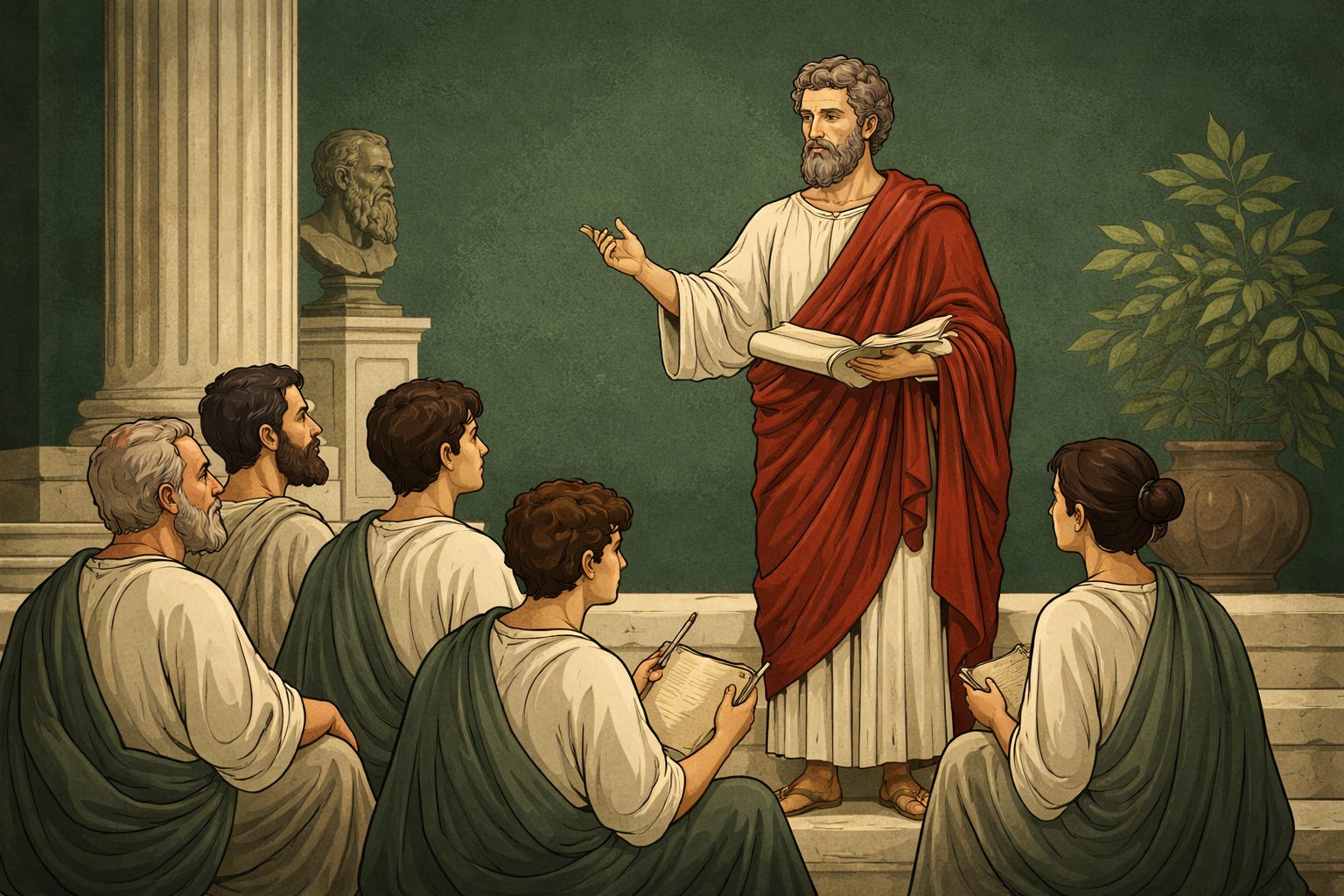
The first time you read it, you might nod and move on. Reading it the tenth time, after you’ve ruined another evening replaying an argument in your head, it hits differently.
What I understand from reading it: the thing that happened and the story you’re telling yourself about it are not the same.
Someone cancels plans. That’s the event, but then comes your interpretation: they don’t value my time; they never prioritize me; I’m always the one making the effort; this friendship is one-sided. That’s the story.
And it’s the story, not the cancellation, that keeps you up at night.
I love my sleep; I don’t want to stay up all night.
The Stoics understood something we keep forgetting: we live inside our interpretations. The event happens once; the interpretation happens continuously, looping in our minds, gathering evidence, building a case.
Most of the time, we don’t even notice we’re doing this. The story feels like the truth. It feels like we’re simply responding to reality, but we’re actually responding to our narrative about reality, which is always incomplete, always filtered through our fears and past experiences.
Your colleague doesn’t say good morning. The event is neutral, but your mind fills in the blanks: they’re angry with me, I must have done something wrong, everyone’s turning against me. Within seconds, you’ve written an entire screenplay based on someone walking past you.
Where am I heading with this?
You have the power to revoke that interpretation at any moment.
Not by denying reality, but by questioning your story about it.
Maybe they didn’t see you. Maybe they’re preoccupied with something in their own life. Maybe they’re not a morning person. Maybe it meant absolutely nothing. All of these are just as likely as your catastrophic narrative, but your mind chose the painful one automatically.
Why do we do this?
Often, because the painful story feels safer, it gives us something to prepare for, something to defend against. It confirms what we already believe about ourselves or others. It makes the world predictable, even if that prediction is bleak.
There is a cost. You suffer for things that haven’t happened and might never happen. You damage relationships based on stories you invented. You live in a reality you created, then blame external circumstances for your pain.
The freedom Marcus talks about isn’t easy. It requires catching yourself mid-story.
It requires pausing when you feel that familiar tightness in your chest and asking, “What am I telling myself right now?” What interpretation am I choosing? Is this the only possible reading of events, or just the most familiar?
This is harder than it sounds because our stories feel true. They arrive with such conviction, such emotional weight. Your mind presents its interpretation as fact, and questioning it feels like denying reality.
Emotions aren’t evidence. They’re responses to the stories we tell.
Someone criticizes your work. You can tell yourself: I’m incompetent, I’ll never be good enough, I should give up. Or you can say to yourself: this person has a different perspective, there might be something useful here, and feedback is part of growth.
Same event. Completely different experience of it.
The Stoics aren’t asking you to be delusional. If someone is genuinely harmful, see it clearly. If a situation is actually dangerous, respond appropriately, but as Marcus said, most of our suffering isn’t from genuine threats; it’s from the stories we spin around ordinary events.
Let me end with what I think emotional freedom looks like.
It’s noticing when you’re catastrophizing and asking, ‘What else could this mean?’ It’s recognizing when you’re mind-reading and admitting, “I don’t actually know what they’re thinking.” It’s catching yourself in a narrative loop and choosing to step out of it.
It’s understanding that you can acknowledge an event without accepting your first interpretation of it.
This doesn’t happen overnight. Your mind has been practicing these stories for years, perfecting them, making them automatic. They’ll keep arising. Each time you catch one, examine it, and choose differently, you’re training a new muscle.
Marcus knew that external events would always be partly beyond your control. People will disappoint you. Plans will fall through. Life will not cooperate with your preferences.
Now, all you have to do is start paying attention to the gap between the event and the interpretation.