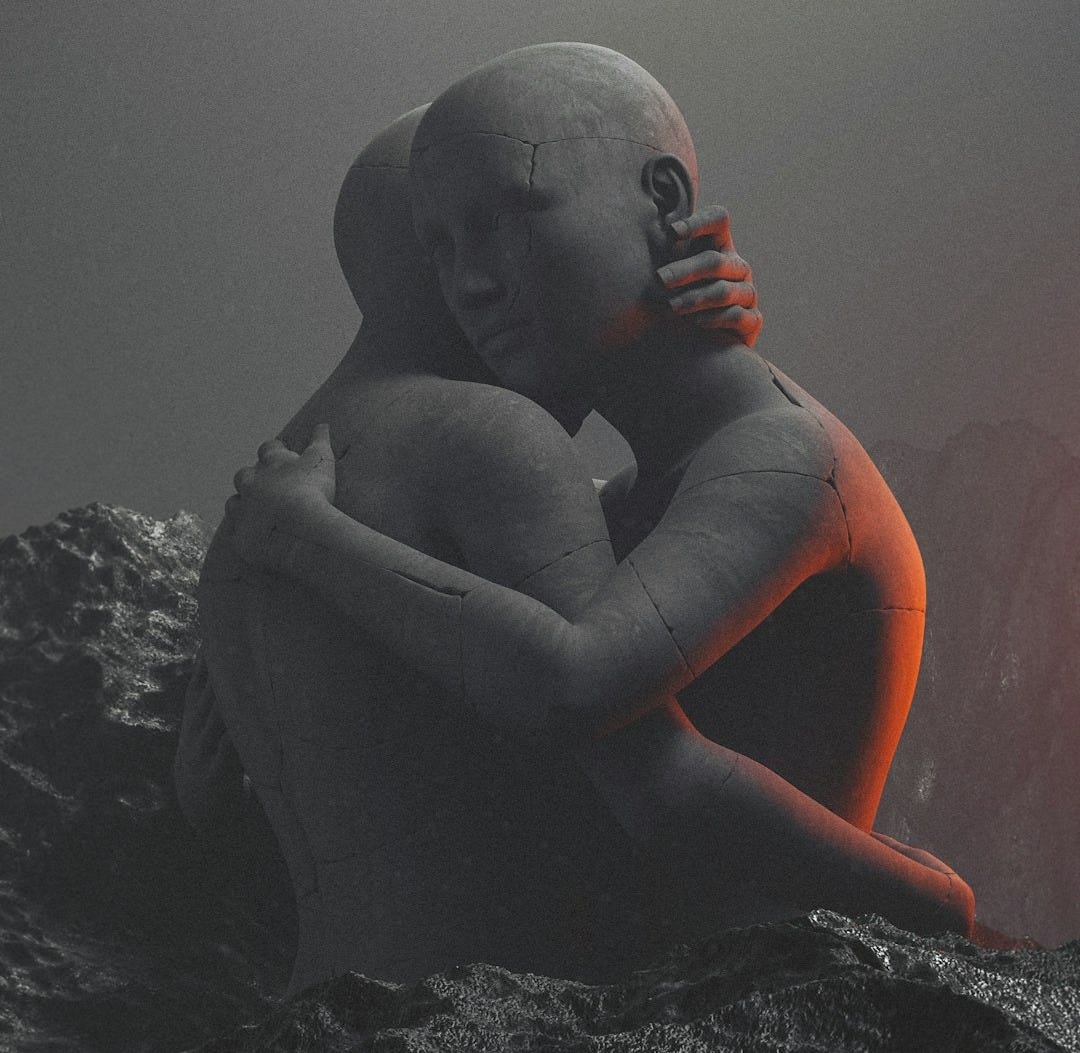
For a long time I believed I had a temper.
A late train or a colleague's week-old reply could set my jaw for an hour, and I filed this under “personality” and moved on. It took me years to notice that the anger always comes in a coat that does not fit.
Emotions travel in borrowed clothes far more often than we admit. Grief puts on irritation because irritation feels more dignified in public.
Fear buttons itself into control. The feeling you meet at the door is often a familiar coat with a stranger inside.
Learning to see through the costume is what psychologists call “metacognition,” the habit of thinking about your thinking and feeling about your feeling. It begins with a close look at the fit.
Start with the size: A coat that swamps its wearer gives itself away, and so does an emotion out of proportion to its cause. Fury at a minor slight means a greater force is at work. Numbness in a moment that ought to move you means the same thing in reverse: a feeling so overwhelming that the mind has shut the door on it entirely.
When intensity and trigger refuse to match, assume a disguise.
Then look beneath the lapels: When anger arrives, ask yourself what you would feel if anger were forbidden to you. The answer is usually grief or hurt; softer states that anger was hired to guard. Numbness deserves the same treatment, so ask what it is protecting you from. Often the reply is terror or a sadness large enough to drown in.
Families decide which coats their members may wear. Every household has its forbidden feelings, and those feelings are the likeliest to return in full force years later.
We all have those family rules. Children learn them from a raised eyebrow at dinner or from the way a parent leaves the room. A child taught that sadness was self-indulgent grows into an adult whose sadness comes dressed as irritability. Where fear was considered weakness, it tended to resurface as anger or an appetite for control.
The body is harder to fool than the mind.
William James argued in 1884 that “the bodily changes follow the perception of the exciting fact directly, and that our feeling of the same changes as they occur is the emotion.”
This famous quote introduces the James-Lange theory, which states that physical reactions in the body create our emotions rather than follow them.
Take him at his word, and the body becomes a tailor's measure. Anger runs hot and expands outward. Grief sits heavy in the chest. Fear tightens and narrows. Shame makes you want to disappear.
If your chest is heavy while your mind insists you are merely annoyed, trust the chest and investigate the discrepancy.
Watch the wardrobe over months rather than moments.
A person who is often angry and never sad is feeling sadness as anger. Someone who is always fine and never vulnerable has dressed vulnerability as stoicism.
From the outside, this kind of monotony can pass for stability. A single emotion worn day after day, in every weather, tells you the rest of the wardrobe is locked away.
My temper, when I looked at it properly, was mostly a fear of being overlooked, cut from a sharper cloth. The discovery changed less than I had hoped. My jaw still sets when the train runs late. What has shifted is that I can now see the coat hanging off the shoulders, and I know who is wearing it.