


A few months ago, I watched a violinist prepare for a major performance.
She was dealing with grief, as her mentor had died weeks earlier. Everyone expected her to postpone. Instead, she chose to play, but she didn’t perform despite her grief. She performed through it.
She chose pieces her mentor loved. She let the sadness inform her interpretation, making her playing more vulnerable, more human than the technically perfect performances she’d given before. She aligned her emotional state with her performance rather than trying to separate them.
Afterward, she said something I haven’t forgotten: “I used to think peak performance meant controlling my emotions. Now I think it means channeling them.”
I am sure you have witnessed this or seen it in a movie that explored it, from Whiplash to Black Swan to The Pianist.

When we pursue peak performance, we imagine we need emotional discipline, the ability to compartmentalize, to perform regardless of what we’re feeling. We want to be told how to transcend our emotional state and access our capabilities in a purely objective way.
We believe peak performance requires emotional neutrality.
Those feelings are an interference to overcome, not a fuel to harness.
But watch what actually happens when you try to perform while suppressing what you feel: you’re divided. Part of you executes the task, and another part maintains the suppression. That split attention costs you the very performance you’re trying to protect.
Peak performance and emotional alignment aren’t opposites but prerequisites for each other.
What happens:
The athlete who pretends they’re not nervous before a crucial match doesn’t perform better. They perform worse because they’re using energy managing their image instead of channeling their activation into explosive movement.
The surgeon who denies their fear during a complex procedure doesn’t operate more cleanly. They operate more rigidly because they’ve lost access to the intuition that comes from acknowledging and working with their emotional read of the situation.
The speaker who fights their excitement before a presentation doesn’t become more articulate. They become more wooden because they’ve suppressed the very energy that would make their delivery compelling.
How it should be:
The musician who acknowledges their pre-performance anxiety and uses it to sharpen focus plays with more precision than the one who pretends to be calm.
The writer who recognizes their frustration with a topic and lets it drive their argument produces sharper prose than the one who waits until they feel neutral about it.
The entrepreneur who admits their fear about a risky decision and examines what that fear is protecting them from makes a better judgment than the one who bulldozes through it, pretending to be certain.
Emotional alignment doesn’t mean being controlled by your emotions. It means being honest about what you’re feeling and asking how that state can serve your performance rather than sabotage it.
So why do we pursue separation precisely when the stakes are highest?
When performance doesn’t matter much, we allow ourselves to feel freely. When everything’s on the line, we assume we need to lock emotions away, that peak performance requires becoming a machine.
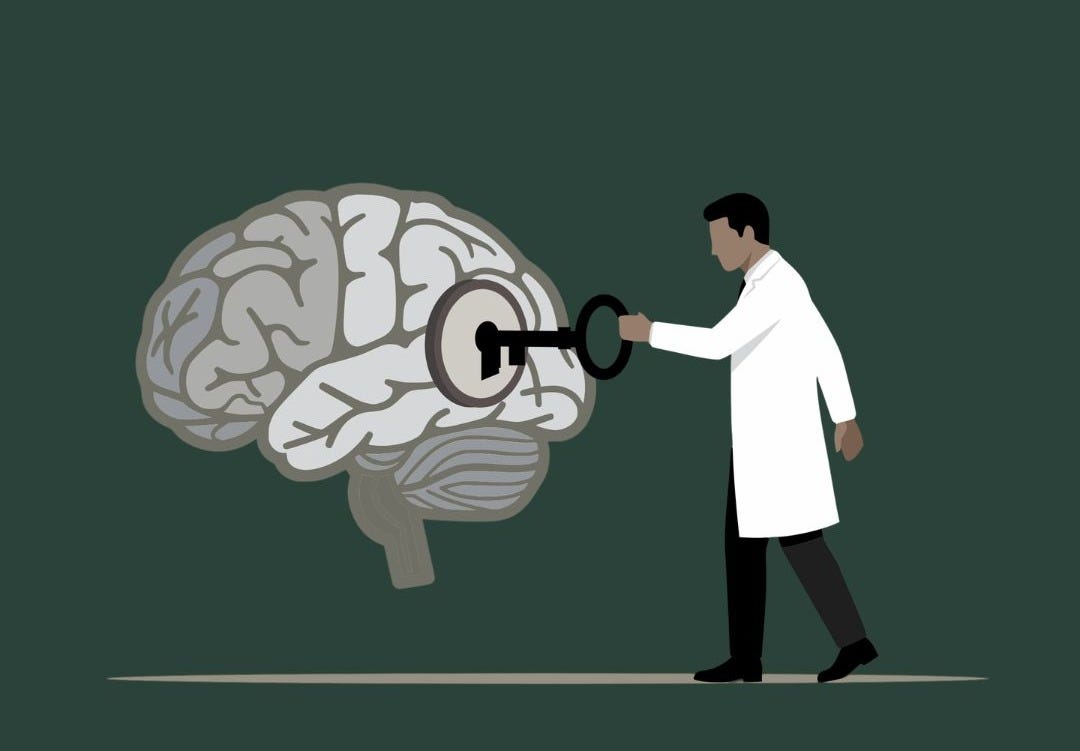
We’re solving the wrong problem.
The question isn’t how to perform without emotion, but how to align your emotional state with the demands of performance.
Sometimes that means using your emotions as fuel. Anger becomes intensity, anxiety becomes alertness, and joy becomes expansiveness. You’re not suppressing; you’re redirecting.
Sometimes it means acknowledging that your emotions change what’s optimal. If you’re grieving, maybe peak performance isn’t technical perfection. Maybe it’s emotional authenticity that connects more deeply despite technical imperfection.
Sometimes it means recognizing your emotional state makes certain approaches available and others impossible. You can’t perform with light playfulness while carrying heavy sadness, but you can perform with gravitas, depth, and weight that wouldn’t be accessible otherwise.
Convergence occurs when you stop treating emotions as obstacles and start treating them as information for optimizing your approach.
My friend Karim, who is a trial lawyer, has learned to read his emotional state before big cases. When he’s anxious, he prepares differently: more thorough notes, more structured arguments, because his anxiety makes improvisation harder. When he’s confident, he prepares differently, with a looser framework, trusting his ability to respond in the moment.
Same performance goal but different paths depending on emotional alignment.
His peak performance isn’t despite his emotions; it’s because he’s aligned his strategy with his actual state instead of pretending he’s always the same.
When athletes talk about being “in the zone,” they’re not describing emotional neutrality. They’re describing complete alignment among their emotional state, intention, and action. No part of them is fighting any other part.
That alignment is what peak performance actually feels like.
It’s not a moment of control but of coherence.
The experienced performer still has emotions during critical moments. The master still feels nervous, excited, doubtful, and determined. But they’ve learned that those emotions aren’t problems to solve. They’re variables to work with.
When you’re pursuing peak performance, don’t ask how to eliminate what you feel; instead, ask how to align with it.
What does your current emotional state make possible that you couldn’t access otherwise? What makes it harder is that you need to work around? How can you adjust your approach to leverage your state rather than fight it?
Are you trying to perform like someone you’re not, or performing as who you actually are right now? Are you using energy to suppress or to execute? Are you divided or aligned?
Peak performance isn’t mechanical but rather human beings operating at full capacity, including their full emotional range.
Peak performance is not beyond emotions but through them.
Thank you for reading. Your time and attention mean everything. This essay is free, but you can always buy me coffee or visit my shop to support my work.
For more thoughts and short notes, please find me on Instagram.