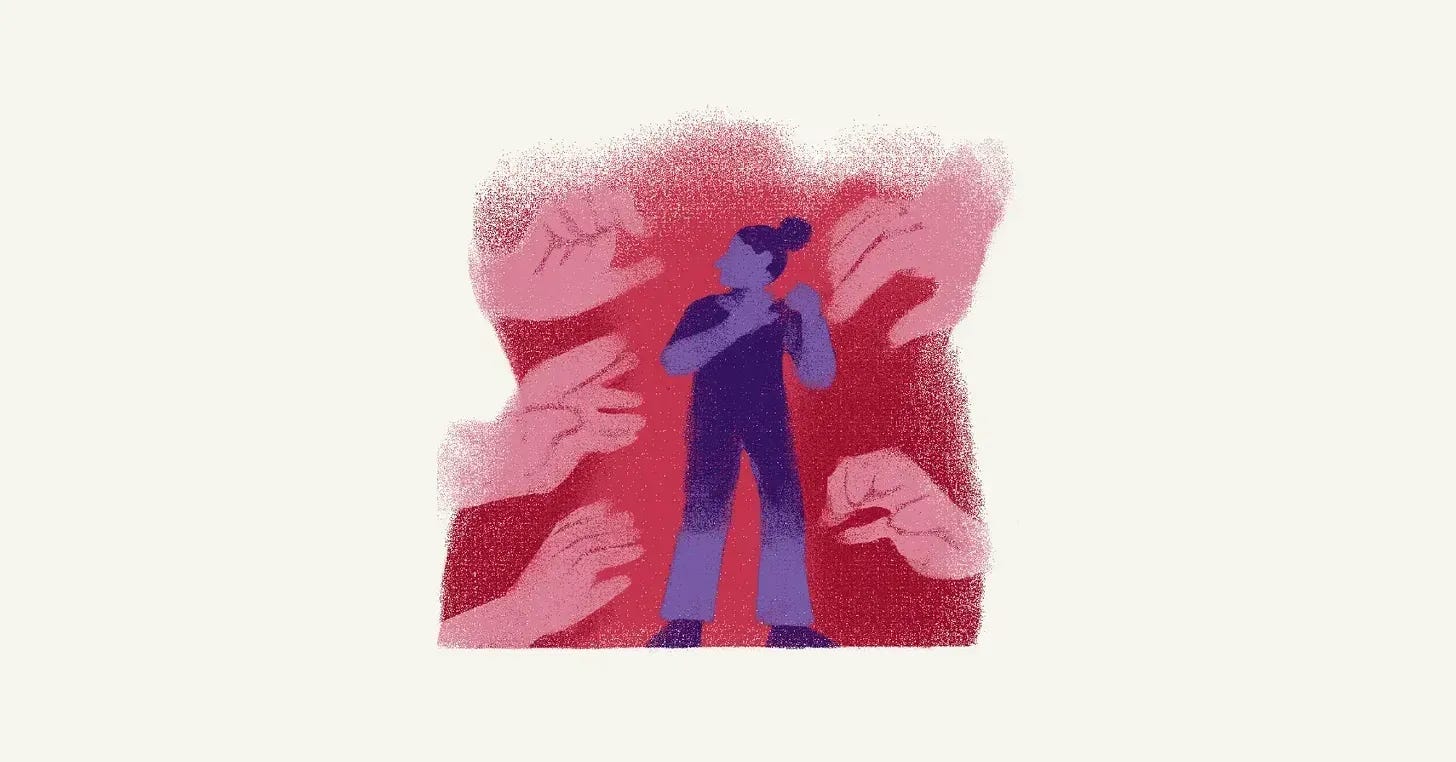
A smoke alarm is not the fire.

It is a small, insistent device designed to inform you about the possibility of fire, and its entire usefulness depends on your understanding of that distinction. The alarm is loud on purpose, but loudness is not the same as accuracy.
Your emotions work in much the same way.
Anxiety, anger, resentment, that flat grey nothing that descends on an ordinary Tuesday afternoon. None of these are commands, and none of them are verdicts. They are signals. They are your inner system flagging something it thinks you should attend to, and like any alarm, they are sometimes exactly right and sometimes responding to nothing more than burnt toast.
The trouble begins when we treat the alarm as the emergency itself. We feel afraid, and so we conclude there must be something genuinely dangerous nearby. We feel like a fraud in a meeting, and so we quietly decide that we must actually be one. We mistake the intensity of the feeling for proof of its content. But a feeling is only ever pointing at something. It is never, on its own, sufficient to prove that the thing it points at is true.
This matters because the two responses look entirely different. If the feeling is data, then the intelligent move is not to obey it or suppress it, but to read it. You get to pause and ask a genuine question: what is this trying to tell me, and is it right this time?
Occasionally the answer is that there really is a fire, and the fear has done you an enormous favor by getting you moving. Far more often, the answer is that the alarm is oversensitive, triggered by an old memory, a tired body, or a story you have told yourself too many times.
Learning to sit in the space between feeling something and believing it is one of the most useful skills a person can develop. It does not require you to become cold or detached. You still feel the fear fully; you stop treating every surge of it as a subpoena you are obligated to answer.
The alarm has a job, and it is doing it. Your job is different. Your job is to walk into the room, look around, and decide for yourself whether the situation calls for calm or for the exits. You may check before you evacuate the building.