


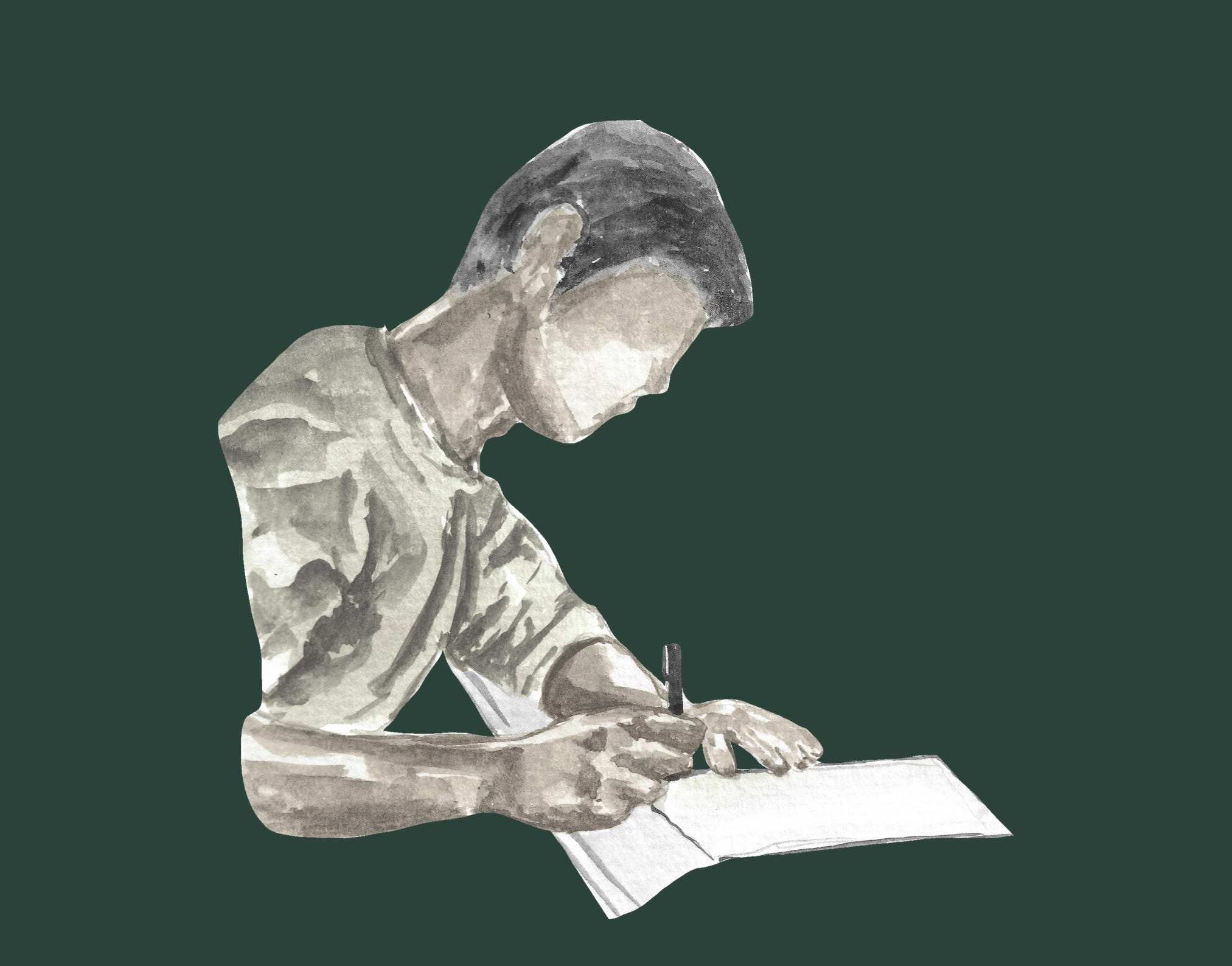
For two years, I kept a first draft of an essay in a folder I labeled “almost.”
It was about language and belonging, about what it costs to live between tongues, and I was certain it needed one more pass before it was ready.
One more read-through, one more restructured paragraph.
The essay was not bad. It may even have been good, but good felt like a threshold I had not yet crossed, so I kept it in the folder and kept crossing back toward it, again and again, without ever arriving.
Nobody ever read it.
I tell this story now with a kind of rueful recognition, because I know exactly what I was doing: not crafting or caring, but hiding. I was hiding, and I had found a form of hiding that wore the costume of dedication.
Perfectionism is a very good disguise. It speaks in the language of standards and craft and refusal to compromise, and those words feel serious, feel earned. They feel like the opposite of fear, but they are not.
The creative world has built a romance around the person who cannot let go.
The writer who rewrites to the point of destruction, the designer who agonizes over a single typeface for an afternoon, the artist who burns work that falls short of an internal standard no one else has seen. We treat this as evidence of seriousness, of depth.
It is understood, in certain circles, that to care deeply about your work is to be perpetually dissatisfied with it. Dissatisfaction is proof of love, yeah, that creates a good Hollywood flashback montage, but what the dissatisfaction actually produces is not better work but less work.
Willa Cather wrote that “the end is nothing, the road is all.”
It is a beautiful line, used often to celebrate process over product. What it does not account for is the person who never reaches the end because the road has become a permanent address.
Process, at a certain point, stops being a process and starts being avoidance with good lighting.
The distinction I have had to learn, slowly and with some cost, is between what requires uncompromising attention and what requires only adequate attention.
These are not the same category, and confusing them is expensive. A piece of writing that carries an argument central to everything else you are building deserves close revision, multiple drafts, and real time.
The email confirming a meeting does not. The final paragraph of something that will last deserves care. The internal document that three people will read once does not need to be signed.
High standards, applied without discrimination, are not standards at all.
The surgeon who sterilizes with absolute precision and then agonizes over the font in their presentation slides has not maintained standards across the board; they have misread which board they are standing on.
I started publishing more when I permitted myself to be clear rather than perfect.
Some of those pieces were merely decent, and few were better than anything I had kept in the folder.
The volume taught me things that revision alone could not, because revision without publication is still a conversation with yourself, and that conversation has a limited ceiling.
The essay about language and belonging is still in the folder. I may return to it or I may not. What I know now is that keeping it there was never an act of care but a way of protecting myself from the verdict, dressed up as the pursuit of excellence.
If you have read this until the end and have a version of that folder, do better than me and let it go, you will thank me for that!