


In Apollo 13, the engineers face a problem with no obvious way through.
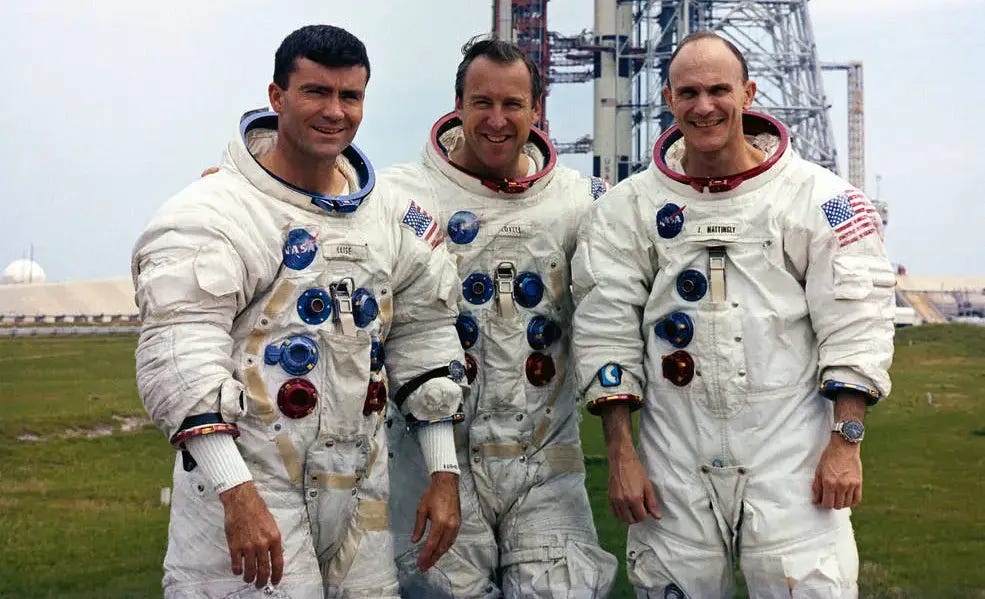
The damaged spacecraft’s carbon dioxide filters are failing, and the crew will suffocate unless someone builds a working filter from the junk that happens to be floating in the capsule, the duct tape, plastic bags, and cardboard, nothing else.
The lead engineer empties a box onto a table and tells the room to make this fit into the hole for that, using only what is in front of them. The limits are so severe that they look fatal, but they are also what make the thing solvable.
Fixing the filter is overwhelming. Connect these particular objects so they seal is hard and focused and, just possibly, within reach.
When the work stalls, we assume we need more: more time, more options, more room.
We treat limits as walls to get around rather than the structure that lets us begin at all. Then we are handed the open afternoon, and the blank page, and nothing happens because anything is possible, and so nothing is necessary.
Total freedom turns out to be its own kind of paralysis. Every choice demands a justification, every color and word and approach is second-guessed, because there is always another that might have been better.
Constraint ends that. When most of the options are gone, the remaining choice becomes obvious, sometimes made for you. It also gives a diffuse feeling of somewhere to go.
Grief with unlimited time may never resolve into anything; grief with five hundred words is forced to find what actually matters and leave the rest. The limit reveals the essence by refusing to let you keep everything.
Spielberg learned this on Jaws.
He had meant to show the shark constantly, and the mechanical one kept breaking, so he conjured it instead through a fin, a barrel, a few notes of music. The terror lay in the suggestion, and he later called the broken shark the best thing to happen to the film.
G. K. Chesterton put the principle in a sentence. “Art,” he wrote, “consists of limitation. The most beautiful part of every picture is the frame.”
The stone resists the sculptor, and the form resists the writer, and without something pushing back, there is nothing for the effort to shape itself against.
So when you are stuck, do not reach for more freedom; add a wall.
What if it had to be finished today, or fit in a hundred words, or be explained to a child? It will not be easy. It will be specific, and that is what makes it possible.