


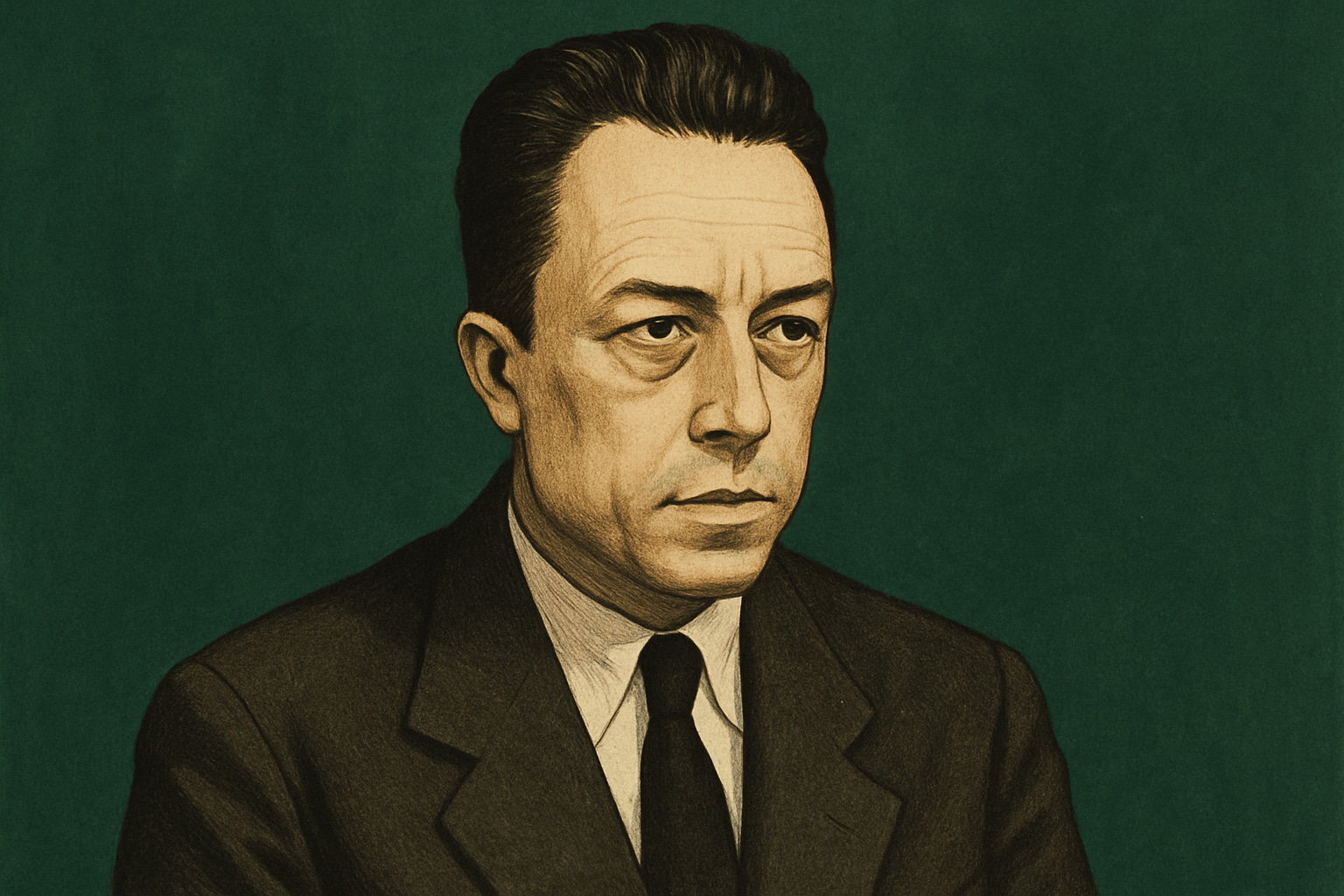
There is a line, often attributed to Albert Camus, that has haunted me for years. He says: ‘Live to the point of tears.’ It’s a deceptively simple command. When you first hear it, you might think he is simply asking us to be more dramatic, or perhaps just to be sadder. But I believe the true meaning is far more profound and much more challenging to enact.
What Camus is really challenging us to do is to refuse the mediocre.
He is asking us to turn off the emotional dimmer switch that most of us leave permanently set to a comfortable, neutral level. Living to the point of tears means embracing the full, unadulterated amplitude of existence, allowing yourself to be so utterly present that you are just as likely to weep from astonishing joy as you are from devastating sorrow.
And I want to share with you how I am slowly, clumsily, learning to actually live this way in my own life, in my projects, and in my relationships. It is an exercise in radical vulnerability.
First, we need to acknowledge the enormous pressure society puts on us to not live to the point of tears. We are encouraged to be emotionally temperate. We are taught that grief should be ‘gotten over’ quickly, that vulnerability is unprofessional, and that euphoria is suspicious, often followed by a crash.
We learn to self-medicate with distraction, with endless scrolling, endless tasks, or endless chatter, all designed to keep us safely within that predictable, neutral zone.
The numbness becomes a defence mechanism. If you do not allow yourself to feel profound love, then you protect yourself from profound loss. If you do not allow yourself to experience the thrilling, terrifying high of starting a huge new project, you protect yourself from the disappointment of failure. The dimmer switch keeps us safe, but it also keeps our lives washed out, like an old photograph whose colours have faded.
The key, I have found, is to understand that the two extremes are neurologically linked. You cannot selectively numb the pain of sorrow without also dulling the sharp, glorious edges of joy. To increase one’s capacity for grief is, paradoxically, to increase one’s capacity for beauty.
When I started to apply this philosophy consciously, I began by focusing on the easy side of the equation: the tears of joy. This is often harder than it sounds, because we are conditioned to expect the catch, the inevitable descent.
I started practising what I call ‘unapologetic joy’.
When a project lands perfectly, when a complex piece of writing finally clicks into place, or when a friend says something genuinely kind that touches the heart, my default used to be to look for the following problem or downplay the achievement. It was a superstitious avoidance of hubris.
Now, I try to pause and let the feeling flood my system. I allow myself to feel enormous satisfaction, even overwhelming. I let the small victories be profoundly moving. This means letting go of the cynical thought that says, ‘This won’t last,’ and replacing it with the simple, courageous acceptance that says, ‘This is happening now.’
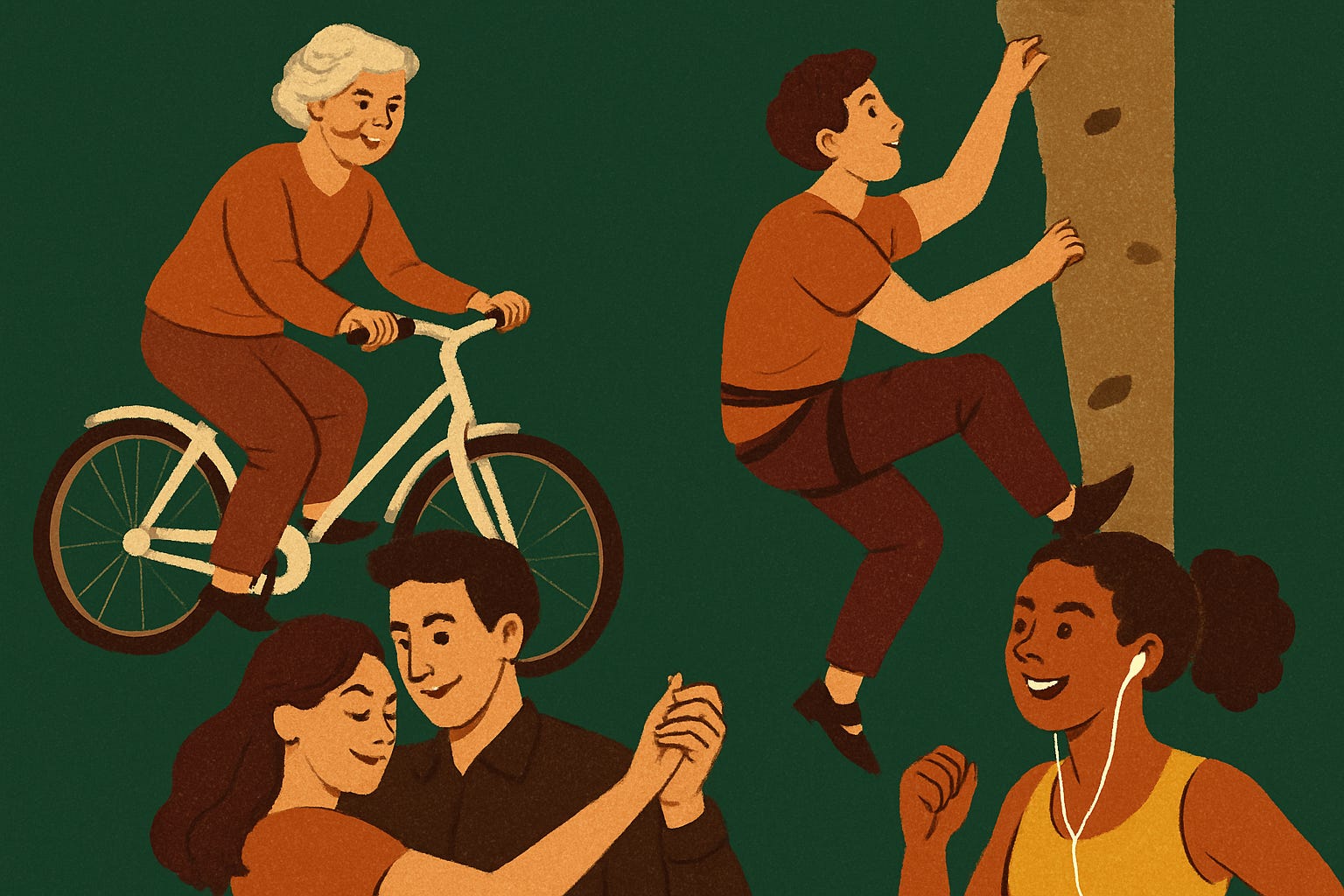
This is not just emotional; it is applied to my work.
When I am working on something difficult, I commit to celebrating the small breakthrough, the perfectly formed sentence, the elegant solution to a coding problem. It is about allowing the intensity of the positive experience to exist entirely, to be genuinely felt to the point where it might bring a tear to the eye. That intensity is the reward that fuels the next deep dive.
The more challenging part of the Camus equation, however, is meeting the darkness, failures, rejections, and the inevitable disappointments of life and work with the same intensity.
In a professional sense, this means not rushing past the sting of criticism. When a project is rejected or a piece of work falls short of its mark, the initial impulse is to rationalise, deflect, or immediately jump onto the next thing. This is emotional self-preservation, but it prevents learning.
Learning to live to the point of tears means sitting with the uncomfortable, burning feeling of having missed the mark. It means letting yourself be honestly disappointed in the depth of a failure, instead of just saying, ‘Oh well, better luck next time.’ It means asking, with genuine curiosity, ‘What does this failure feel like in my body?’
The great Austrian psychiatrist Viktor Frankl, who deeply understood suffering, wrote about the importance of finding meaning in the face of it. But to find that meaning, you first have to acknowledge the suffering completely. You have to let the tears, literal or metaphorical, arrive.
By allowing yourself to feel the full, sharp edge of failure, you signal to your system that this pain matters. And only when something truly matters can you commit to doing better next time. The tears of frustration today become the cement for resilience tomorrow.
Ultimately, Albert’s challenge is an invitation to be truly awake. It is about understanding that the intensity is the point. The rich, messy, beautiful, terrible texture of being alive is found not in the middle ground, but at the edges.
This is not a recipe for instability; it is a commitment to integrity. When you are writing, you are entirely in the creation. When you are loving, you are fully exposed to the possibility of hurt. When you are at rest, you are fully immersed in the quiet peace.
I am learning to look at life, and at my own work, not as a tightrope walk where the goal is never to sway, but as a vast, rich landscape of mountains and valleys. We cannot appreciate the height of the summit if we refuse to acknowledge the depth of the valleys.
So, I encourage you to turn up that dimmer switch. Allow the spectacular sunsets of your achievements to bring a lump to your throat, and allow the hard, dark hours of your struggle to teach you everything they have to offer.
Live the whole spectrum. Live to the point of tears. You will find that it is exhausting, yes, but it is also profoundly, magnificently worthwhile.
Thank you for reading. Your time and attention mean everything. This essay is free, but you can always buy me coffee or visit my shop to support my work. For more thoughts and short notes, please find me on Instagram.
First, we need to acknowledge the enormous pressure society puts on us to not live to the point of tears. We are encouraged to be emotionally temperate. We are taught that grief should be ‘gotten over’ quickly, that vulnerability is unprofessional, and that euphoria is suspicious, often followed by a crash. (this will stay in my mind for a very long time). Thank you so much!