


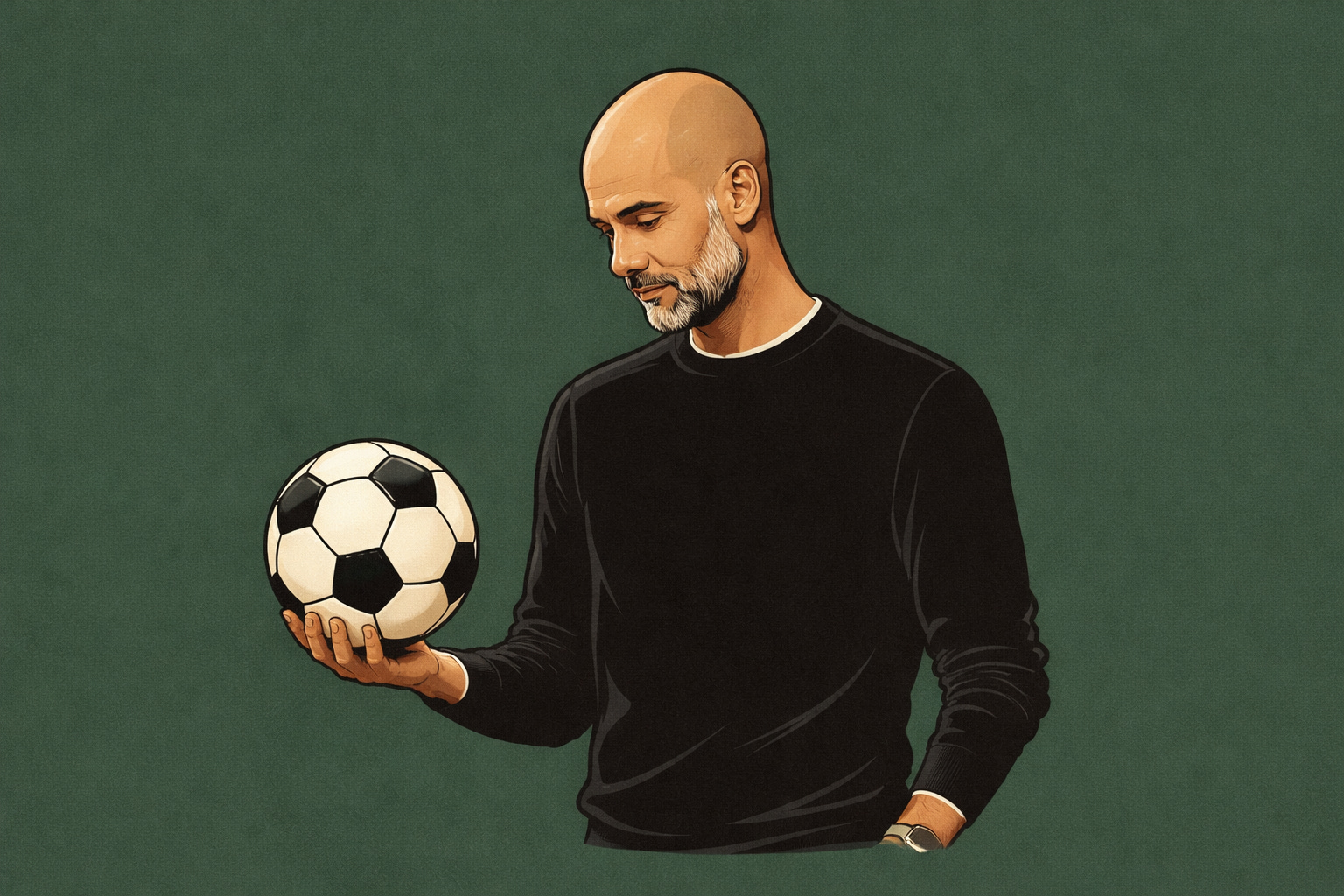
When Barcelona struggled under pressure, Pep Guardiola didn’t revolutionise football. He gathered his players and reminded them of something simpler: pass accurately, move into space, control the ball with your first touch. The basics. Always the basics.
It’s not the answer anyone wanted.
When things fall apart, we want innovation, complexity, the secret technique nobody else knows. We want to be told about the advanced tactics, the hidden strategies, the next level.
Pep understood something most of us forget: mastery isn’t about doing what others can’t imagine. It’s about perfecting what everyone overlooks.
We romanticise complexity because it feels like progress.
The footballer dreams of the bicycle kick, the impossible dribble, the moment that ends up on highlight reels, but watch any world-class player closely, and you’ll see something less flashy: their first touch is flawless, their positioning is instinctive, their simple passes rarely fail.
When the game gets fast and the pressure builds, fundamentals become the foundation that holds it together. Tricks might win you applause, but basics win you matches.
This pattern appears everywhere, once you start looking.
The writer who publishes consistently isn’t waiting for inspiration to strike. They’re showing up to the desk, opening the document, and writing the following sentence.
The speaker who captivates an audience isn’t using complicated rhetoric; they’re making eye contact, pausing at the right moment, speaking clearly, and using simple language.
The cook whose meals people remember isn’t using rare ingredients or elaborate techniques. They’ve learned to salt properly, to control heat, to taste as they go.
The basics aren’t for beginners; they are the foundation for mastery.
Sadly, we abandon them precisely when we need them most.
When things feel easy, we think we’ve outgrown fundamentals. When things feel hard, we assume we need something more advanced to break through.
Both are mistakes.
When a footballer’s form drops, the first instinct is to try new tactics, different positions, and complex plays, but more often, the solution is more straightforward: go back to training. Practice your passing. Work on your first touch. Remember how to receive the ball cleanly.
When your writing feels stuck, you don’t need a new method. You need to do the basics: read more carefully and revise more honestly to check whether your sentences actually say what you mean, then get on writing again.
When relationships fracture, it’s rarely because you need advanced communication techniques. It’s because you’ve stopped doing the simple things: listening without planning your response, showing up when you say you will, and saying thank you.
The basics aren’t exciting. That’s why we forget them.
When you’re lost, don’t look for the next level. Look at your foundation.
Are you sleeping enough to think clearly? Are you actually listening when people talk, or just waiting to speak? Are you reading the question before answering it? Are you doing the simple thing well before attempting the complex?
Mastery isn’t transcending the basics. It’s returning to them until they become invisible, and they’re just how you move.
The experienced writer still checks for clarity before cleverness, and the professional pianist still practices scales, because they’ve learned that everything harder is built on these foundations.
Again, in everything, remember to do the basics; everything else is just decoration.
Love this reframing of what mastery actually looks like. The Pep Guardiola example is spot on, especially since the media always obsesses over tactical innovation when really his teams win through relentless execution of fundametals. In my experince, the hardest part isn't learning basics but maintainin them when things get stresful and shortcuts start looking tempting.