


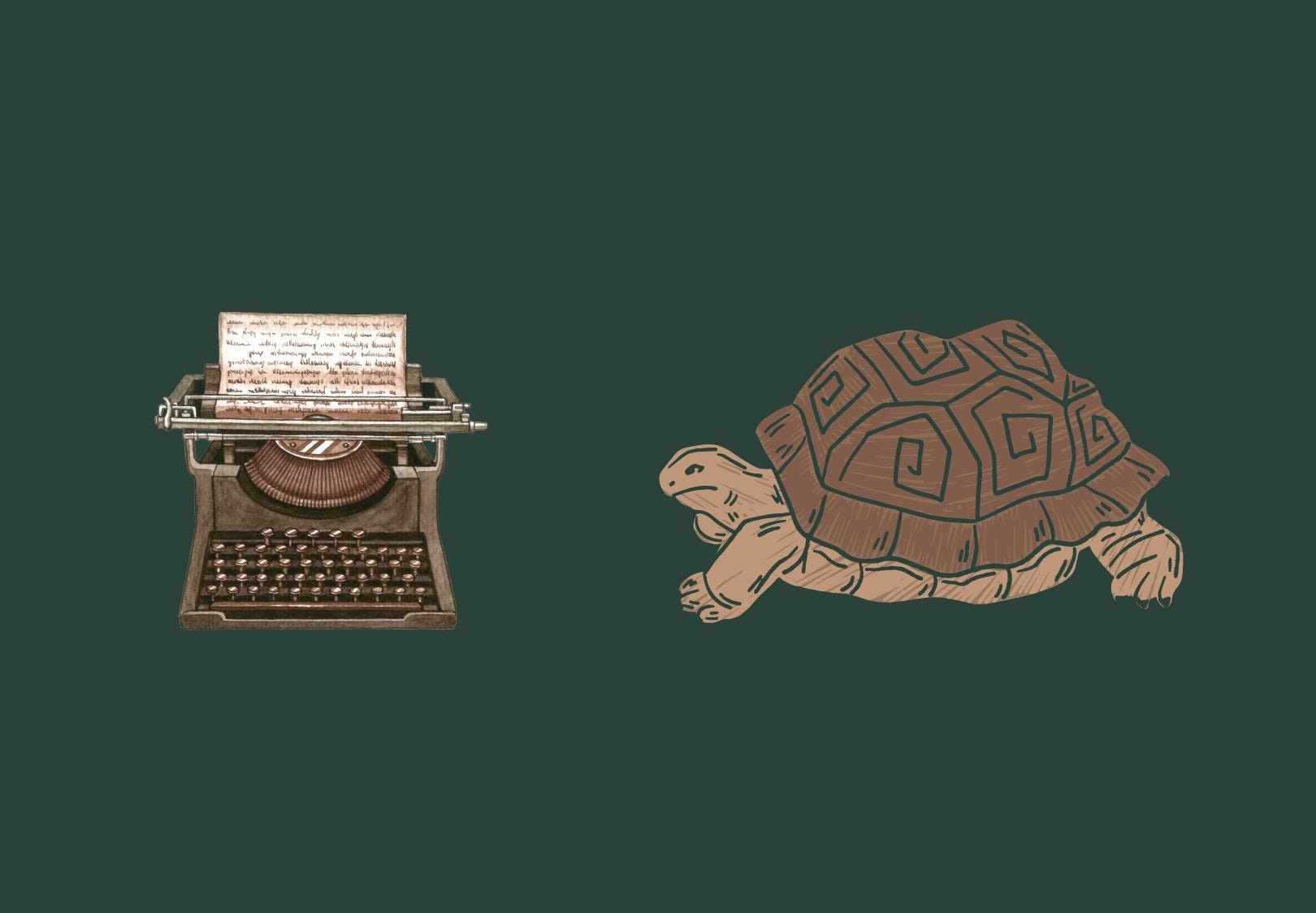
For three years, I wrote every day.
I wrote poorly at times, and usually without inspiration, but I maintained a grim consistency. Notebooks before breakfast, drafts during lunch breaks, frantic journaling before sleep, writing was an anxiety management strategy. I treated the blank page the way some treat the treadmill, convinced that missing a single day meant slipping into irreversible rot.
Life intervened eventually. A move, a new job, and a marriage that required my actual presence disrupted the routine. No, I didn’t light a bonfire for my notebooks; just an evaporation of the habit.
The absence felt physical for months, like a missing tooth. Clarity arrived only after the guilt finally subsided.
We live in a culture where volume masquerades as discipline.
Consistency is treated as the ultimate virtue in the writing world. Writers are told to show up, do the work, and protect the streak. We absorb this gospel so deeply that we begin to confuse frequency with depth, and output with understanding. Much of my daily output, upon reflection, was just noise. Yes, I loved writing, but I think less of it came from the heart as I published because the clock demanded it.
The ecosystem changed when I stopped. Ideas that I would have previously rushed into a half-baked draft were forced to sit in the dark. Some dissolved entirely, proving they were never worth saving. Others grew teeth.
The sentence had become a substitute for the thought, rather than its expression.
The psychoanalyst Adam Phillips writes about the “unobserved life,” the crucial interior experience that has not yet been commodified as narrative or performance.
Writing too quickly short-circuits this incubation. We rush to translate raw experience into syntax before we’ve even felt its weight.
Daily writing had turned me into a stenographer of my own superficiality. It looked like thinking, yet it was just movement. The pen was an engine of distraction; it was a way to feel busy while avoiding the harder, quieter work of being present.
Slowness is culturally suspect. Silence reads as idleness in a world where productivity is moral currency. Absence looks like defeat. We demand legible signals of seriousness: word counts, newsletter frequencies, and the daily post.
The writers I return to most were slow. George Eliot published seven novels across a forty-year career. Joan Didion could spend a year on a single essay. Their slowness was a refusal to let the product outpace the understanding.
Slowness is a neutral tool rather than an inherent virtue.
The romantic myth of the tortured writer who produces nothing while suffering beautifully is just another form of vanity. Daily writing remains a legitimate rhythm, and for many, it is the right one. It just stopped being mine.
What changed was my relationship to my own ideas. I had to trust that something I was thinking about but not writing was still worth the attention. That an unwritten essay is a patience, not a failure. That the work happening in the mind before the fingers move is still work.
I still write. I produce less volume now, but the work carries far more weight. The streak is dead, and the performance of the streak has vanished with it.
My wife watched me staring blankly out the window on a recent Sunday morning and said, "Slow is the new you." She meant it as an observation, but I took it as a liberation.
Thank you for reading. Your time and attention mean everything. This essay is free, but you can always buy me coffee or visit my shop to support my work. For more thoughts and short notes, please find me on Instagram.