


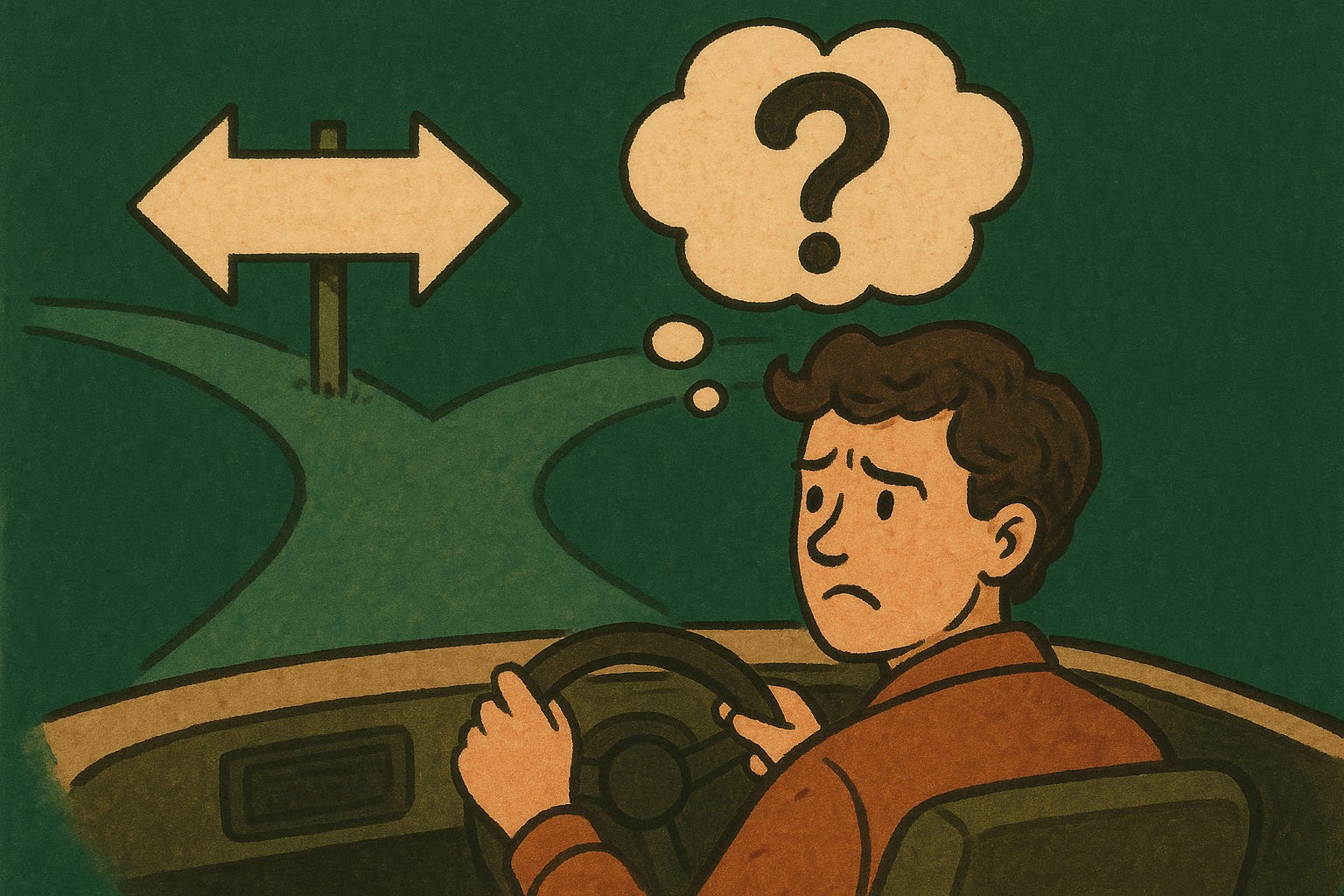
We’re taught to plan. Choose a path. Stick to it. One wrong turn and you’ve messed everything up. You took a gap year instead of going straight to university, and now you’re behind.
You changed careers in your thirties; now you’ve wasted a decade. You ended a relationship you thought was forever, now you’re starting over at the wrong time.
This is the tyranny of the predetermined path. And it’s strangling millions of people who are terrified that they’ve already made the mistake that will define their entire lives.
But paths aren’t actually fixed. And detours aren’t actually failures. They’re redirections. They’re corrections. They’re the mechanism by which life actually works.
The author Annie Dillard wrote, “How we spend our days is, of course, how we spend our lives.” And she meant something important by this; it’s not about planning the perfect life strategy. It’s about showing up fully in the life that’s happening, the one with all its detours and surprises and unexpected turns.
Most of us spend our days in service to an imaginary future where everything works out the way we planned. We’re not actually present in our current lives.
We are mentally managing a life that exists only in a spreadsheet. We’re optimising for an outcome we’ve already determined should happen. And when real life, with its detours and surprises, interferes with the plan, we feel betrayed.
But real life will always interfere with the plan because real life knows things about you that your plan doesn’t. Real life is more intelligent than your five-year plan.
Think about the life you were sure you wanted at twenty. The person you were sure you’d marry. The career that seemed perfect. The place where you were certain you’d be happy.
Most of us would be miserable if we actually achieved that plan. We were planning based on incomplete information. We were designing for the person we were, not the person we were becoming.
The psychologist Daniel Gilbert researched what he calls “the end of history illusion.”
He found that people systematically underestimate how much they’ll change in the future. We’re certain we’ve figured ourselves out.
We are sure we know what we want. We’re confident in our plans. And then a decade passes, and we’ve become entirely different people with completely different values. But by then, we’re often too invested in the original plan to adjust.
So the detours aren’t deviations from the good life. They’re often the actual mechanism by which you find it.
The person who burned out in their high-status career and “wasted” five years trying other things? That was the process of figuring out what actually mattered. That wasn’t a failure to stick with the plan. That was the plan working as it should, guiding you away from what doesn’t fit.
The relationship that fell apart at what seemed like the wrong time? Probably the right time. The moment it became clear it wasn’t working, and you needed to end it. Not because the plan was ruined, but because the plan was wrong.
The job you didn’t get sent you spiralling because you’d built everything around getting it?
The place you landed instead might be exactly where you needed to be. You can’t see it yet because you’re still mourning the original plan.
The most successful people aren’t the ones who stuck to their original plans. They’re the ones who were willing to abandon them when real life delivered better information. They’re the ones who noticed when something wasn’t working and dared to turn.
Steve Jobs didn’t have a five-year plan that included getting fired from Apple. Reed College didn’t fit his initial plan either. Neither did calligraphy classes. Neither did the circuitous path that led him to sit on a meditation cushion and think about design. But each detour taught him something he couldn’t have learned if he’d stayed on the original path.
J.K. Rowling’s plan was to be a lawyer. The detours, divorce, poverty, rejection, looked like failures, like derailments. But they were the price of entry for the actual life she was meant to have.

The difference between people who eventually become unfulfilled and people who eventually become fulfilled often isn’t that one group stuck to their plan and the other didn’t. It’s that one group was willing to adjust based on what they learned, and the other kept forcing themselves to fit the original design.
The therapist Harriet Lerner talks about this in the context of apologies and repair. But she’s really talking about something bigger, the capacity to notice when something isn’t working and have the humility to change course. That’s what separates a life well lived from one that just looks good on paper.
When you stop seeing your life as a fixed path, a lot changes. You stop catastrophising about mistakes. You stop treating every setback as a sign that you’re ruined. You stop trying to optimise for an outcome that might not even be right for you anymore.
You start noticing things. You start paying attention to what actually works, not what was supposed to work.
You start following the thread of genuine interest rather than the one you thought you should follow. You start trusting that the detours contain information.
The novelist Cheryl Strayed walked the Pacific Crest Trail as a detour from the life she thought she was supposed to have.
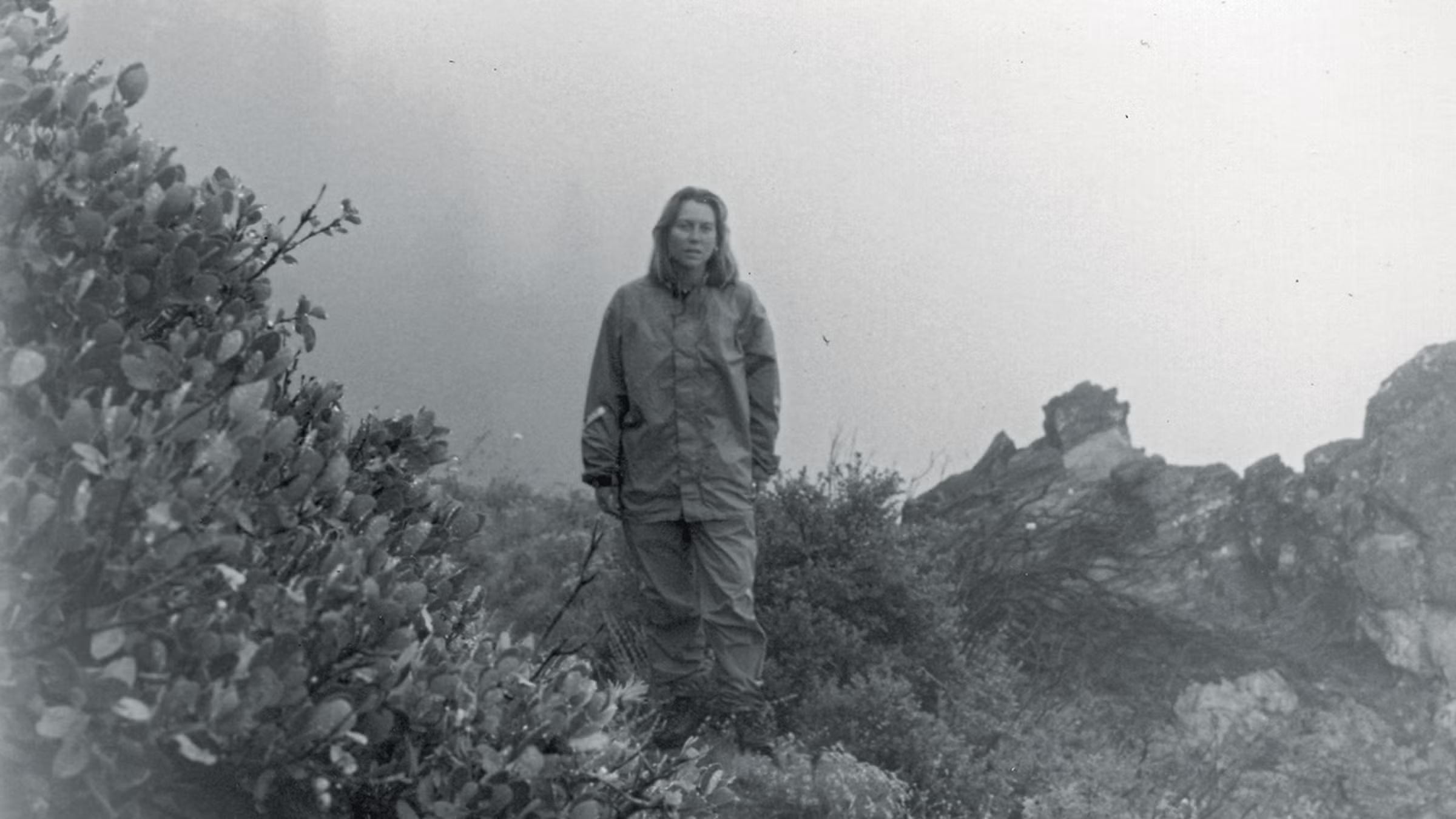
She’d planned to be one thing, and the detour, wild, rugged, unscheduled, is what made her who she became. Not despite the detour. Because of it.
This requires a different kind of trust. Don’t trust that you know where you’re going. Trust that you’re intelligent enough to recognise what’s working and adjust when it’s not. Trust that your instincts, when you quiet down enough to hear them, are usually right.
Trust that the life that’s actually trying to happen is more intelligent than the life you planned.
The path you’re on doesn’t have to be the path you meant to be on. That’s not a tragedy. That’s freedom. That’s the moment you realise you’re not obligated to a plan you made before you knew yourself. That you can change your mind. That you can turn around. That you can follow the new thread.
And here’s the beautiful part: the detours almost always make more sense in retrospect. The turn you were terrified of? It was exactly right. The mistake you thought would ruin everything?
It was actually a necessary course correction. The thing that felt like failure? It was information.
We’re terrible at predicting what will make us happy. We’re lousy at knowing what we actually want before we try it.
We’re awful at understanding ourselves from the outside, from the planning desk. We’re only smart about these things from the inside, in real time, as we’re living them.
So stop trusting the plan. Start trusting the detours. Stop trying to force yourself into the shape you thought you should be. Start noticing which way actually feels alive.
The path isn’t fixed. The path is made by walking. And the best paths are the ones that surprise you.
Thank you for reading. Your time and attention mean everything. This essay is free, but you can always buy me coffee or visit my shop to support my work. For more thoughts and short notes, please find me on Instagram.