


I love Ted Lasso; if you know me, that shouldn’t be a surprise. Five years ago, I wrote a bit about the show and how it helped me navigate toxic masculinity.
Now it is in season 4.
In the Season 4 premiere of Ted Lasso, aptly titled “Home,” we find TV’s favorite mustache-wearing coach living a life that looks ideal on paper, yet feels subtly hollow. Years after returning to Kansas City (State of Missouri or Kansas—oh, there is a good joke about this) to be closer to his son Henry, Ted has settled into an understated routine as an assistant manager at a local supermarket.
He still exudes his trademark charm, mentoring young employees between grocery aisles and co-parenting comfortably with his ex-wife, Michelle, but beneath the surface, Ted is going through the motions.
The narrative shifts when familiar faces from AFC Richmond, Rebecca, Keeley, and Higgins, arrive on his doorstep. They offer Ted the opportunity to return to England to lead Richmond’s newly formed women’s football team.
Paralyzed by the fear of abandoning his son again, Ted initially turns down the job.
However, interactions with his mother and son make him realize that children learn not just from proximity but from watching their parents live fulfilled, authentic lives.
Before departing, Rebecca delivers the line that anchors the entire chapter: “Sometimes home is just a state of mind.”
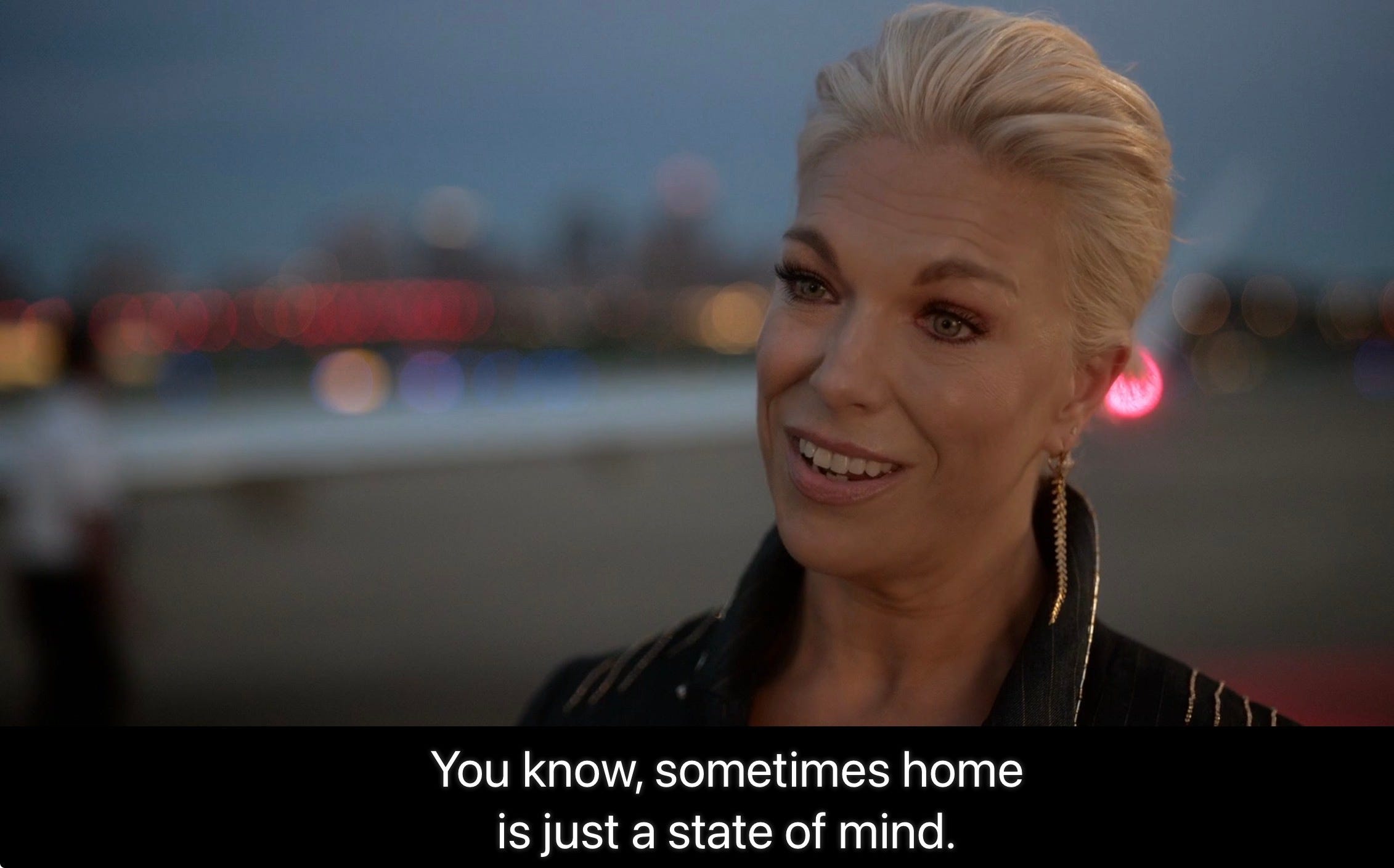
If you are to take something from this essay, it is that home is alignment, not geography.
For years, Ted assumed that returning to Kansas City was the only way to be “home” and fulfill his duties as a father. Yet, his quiet malaise at the grocery store demonstrates that physical location means very little if your life is displaced.
A person can stand in the correct house and remain a long way from himself.
I believe that home is found where your people, purpose, connection, and self-expression overlap.
Ted’s people are Henry and Michelle, but for a few years, his people have become Rebecca, Keeley, and Higgins. That is why the decision is hard, as for Ted, home is also now on the touchline: coaching, encouraging, and helping people grow into better versions of themselves.
Leaving a place does not mean losing it, and moving forward does not mean leaving love behind.
If home were a fixed point on a map, belonging would be a matter of transport. You could simply go back, but if home is a state of mind, then it has to be built from the inside, out of clear values, honest work, and relationships that survive distance. That construction is harder than a house, and it is also portable.
This type of home travels with you through every departure and every arrival, which means leaving a place stops feeling like a betrayal of it.
I can possibly relate to this as I grew up in Rwanda, which is home, spent a decade in the UK, which is now home, and recently married a French woman. So France will likely be home soon, or maybe that doesn’t matter, as belonging, in the end, is measured by alignment rather than distance.
When home is a state of mind, we are free to venture wherever our purpose calls, knowing we can never truly be lost.
Remember that the people who feel most at home are frequently far from where they started, and the people who feel most lost are often standing in their childhood bedroom.
What anchors us is the clarity we carry about who we are and what we are for. If we carry that, we are free to go wherever our purpose calls, because we can arrive anywhere and already be home.