


In Shusaku Endo’s novel “Silence,” a Jesuit priest waits for God to speak during his persecution in Japan. The silence he encounters isn’t absence but presence that refuses to perform on his terms.

I thought about that book during a terrible fight with my best friend. We’d said everything that could be said; accusations, defenses, hurt piled on hurt.
Then we both went quiet.
Our silences were different.
Mine was the silence of withdrawal. I’d shut down, pulled back, and erected walls. The quiet was protective; if I don’t speak, I can’t be hurt more. My silence was a locked door.
Hers was the silence of digesting. She’d gone quiet to think, to feel, to process what had been said. The quiet was active; she was working through something internally. Her silence was an occupied room.
We sat in those different silences for maybe a few minutes. It felt like an hour. And I realized: the silence itself was communication. What it was communicating depended entirely on which kind of silence it was.
Not all silences are equal. Some heal. Some harm. Some are neutral space. Some are aggressive weapons. Learning to distinguish between them changed how I navigate every important relationship.
Silence is the theme I explore in this essay. If you’re looking for a film recommendation, I suggest watching the adaptation of the novel, starring Andrew Garfield, Liam Neeson, and Adam Driver, in the 2016 film of the same name directed by Martin Scorsese.
Now, onto the 7 types of silences:
There’s the silence of contempt, which kills connection slowly.
John Gottman’s research on marriage identifies contempt as the strongest predictor of divorce. Contempt often manifests as the kind that communicates, “You’re not worth my words.”
This silence is hostile. It’s not the absence of speech but the withholding of engagement. The silent treatment. The cold shoulder. The refusal to acknowledge the other person’s existence.
It says, I’m punishing you by removing myself. You don’t deserve my attention, my response, or my presence. You’ve become invisible to me.
This silence doesn’t heal anything. It’s designed to hurt. To make the other person feel powerless, unworthy, and unable to deserve even the basic courtesy of communication.
I’ve done this. Withheld speech as punishment. Went silent, not because I needed space but because I wanted them to suffer my silence, to feel what it’s like to be dismissed.
It worked, in the sense that it hurt them. It failed in that it destroyed the possibility of a real resolution. You can’t repair a relationship while actively weaponizing your silence against the other person.
There’s the silence of processing, which creates space for understanding.


This is different. This silence says, “I need to think about this. I need to feel my way through what’s happening. I can’t respond immediately because I don’t have clarity yet.”
It’s not withholding. It’s gathering. Not punishment, but a necessary pause.
I have learned to name this silence: “I need some quiet time to process this. I’m not shutting down; I’m thinking. Can we sit with this for a bit?”
That naming transforms the silence from something ambiguous and potentially threatening into something cooperative.
The other person knows you’re not withdrawing contempt; you’re engaged in internal work.
This silence heals because it prevents premature response. It creates space between stimulus and reaction. It allows you to respond from thought rather than just react from emotion.
The writer Annie Dillard described attention as “the continuous creation of my life.”
Processing silence is attention turned inward, the continuous creation of understanding before speech.
There’s the silence of presence, which communicates more than words could.
Someone you love is suffering. Grief, pain, fear. They’re not asking for advice or solutions. They’re not even asking for comfort, necessarily. They just need not to be alone in it.
You sit with them. You don’t speak. You just… are there.
This silence isn’t empty. It’s full of presence. Your body near theirs. Your willingness to stay. Your choice not to fill the discomfort with empty words.
Sometimes this is the most healing silence of all. Because it communicates, “I can handle your pain. I won’t try to fix it, minimize it, or distract from it. I’ll just be here while you feel it.”
Words in those moments often diminish rather than help. They create distance, turning the raw experience into something to discuss, analyze, and manage. Silence allows the experience to just be what it is, with the addition of witnessed presence.
My friend’s father died in a hospital room with family present. After he took his last breath, they sat in silence for a long time. Nobody said, “He’s in a better place,” or “At least he’s not suffering,” or any of the platitudes people offer.
They just sat with the fact of his absence, together.
That silence held more than any words could have. It was an acknowledgment that nothing they said would change what had happened, and presence was the only gift they had to offer each other.
There’s the silence of disconnection, which signals the death of a relationship.
This is different from contemptuous silence. It’s not hostile. It’s just… empty. You’re in the same room, but there’s nothing to say. Not because you’re processing or being present, but because the connection that generated the conversation has eroded.
Couples in failing relationships describe this. Coming home, sitting together, and having nothing to talk about. The silence isn’t comfortable or charged; it’s just vacant.
The relationship has become a logistical arrangement where silence is the default because there’s no actual relationship left to communicate about.
This silence doesn’t heal because there’s nothing to heal toward. It’s the silence of ending, not of transformation.
The only way to address it is to speak, to say explicitly what the silence is revealing.
“We don’t talk anymore. We used to have so much to say to each other. What happened?”
Breaking the disconnected silence with honest acknowledgment is the only chance of reconnection.
There’s the silence of intimidation that reinforces power imbalances.
In hierarchical relationships, parent-child, boss-employee, and teacher-student, silence can be a tool of control. The person with power goes silent, and that silence forces the less powerful person to fill the void, often with admissions, apologies, or promises they wouldn’t make otherwise.
Interrogators use this. Let the suspect fill the uncomfortable silence, and they’ll often confess to things they haven’t been accused of yet. You have seen it in movies, and it works.
Parents use this. The disappointed silence that makes children squirm and volunteer information just to end the terrible quiet.
Managers use this. The silence after a question can lead employees to over-explain or commit to unreasonable things.
This silence doesn’t heal relationships; it enforces compliance through discomfort. The less powerful person learns to fear silence, to prevent it by managing up, by staying small.
There’s the silence of attunement, which allows communication to happen beyond words.
Long-term partners develop this. They can sit in silence, attuned to each other, aware of subtle cues, and comfortable in the shared space. It’s not the absence of communication but communication through presence rather than speech.
You’re reading. They’re reading. Nobody speaks. But you’re aware of each other’s breathing, posture, and energy. If something shifts, they sigh, shift position, and close the book with a certain energy you can't miss. You’re tracking each other without words.
This silence heals through its attentive quality. You’re not ignoring each other in the same room. You’re being together in a way that doesn’t require constant verbal validation.
The musician John Cage wrote “4’33”, a composition where performers sit in silence for four minutes and thirty-three seconds.
The piece isn’t about the absence of sound; it’s about attention to ambient sound, to presence itself. Attuned silence in relationships works similarly. It’s not the absence of communication but attention to what’s present without words.
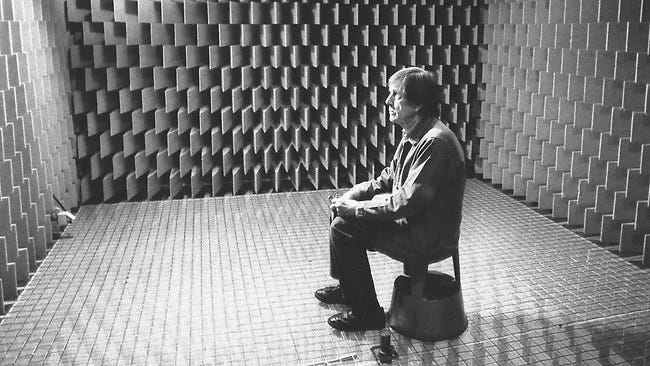
The silence of contemplation, which deepens understanding.
Religious and spiritual traditions understand this silence. Quaker meetings sit in quiet until someone is moved to speak. Meditation practices cultivate silence to encounter reality without the mediating interference of constant mental chatter.
This silence heals by creating space for insight. When you stop filling every moment with words or noise, you can encounter thoughts and feelings that the constant stimulation was drowning out.
Couples who practice contemplative silence together, sit in meditation, walk quietly in nature, and are together without an agenda or entertainment often report deeper intimacy. The silence creates a container for presence that talking doesn’t always allow.
The question isn’t whether silence is good or bad, but what the silence is doing.
When someone goes silent in your relationship, the question is: What kind of silence is this?
Is it withdrawal or processing? Presence or absence? Punishment or contemplation? Intimidation or attunement?
You often can’t tell just from the silence itself. You have to look at context—what preceded it, what the relationship pattern is, what the person’s body language communicates, and what happens after.
And sometimes you have to ask, “I notice you’ve gone quiet. Can you tell me what’s happening in your silence? Are you thinking, or withdrawing, or just being present?”
That question transforms ambiguous silence into named experience. It makes the silence a thing you can talk about rather than an ambiguous space you have to interpret blindly.
Learning to distinguish types of silence is an intimacy skill.
Early in relationships, silence often feels threatening. You don’t know each other well enough to read what the quiet means. Does their silence mean they’re upset? Bored? Comfortable? You fill it with nervous chatter or worried interpretation.
In mature relationships, you’ve learned each other’s silences. You know their processing is quiet from their withdrawn quiet. You know when to give space and when to gently interrupt.
That knowledge is intimacy. Not just knowing what they say, but knowing what their silence says.
The writer Sara Maitland spent years in deliberate silence and wrote, “Silence is not the absence of something but the presence of everything.”
In relationships, silence is the presence of everything unspoken, which includes both treasures and toxins. Learning which kind of silence you’re in determines whether you’re healing or harming.

When you encounter silence in a relationship, don’t just react to the quiet. Ask yourself, what kind of silence is this? What is it communicating? Is this a silence that needs to be broken, or honored, or questioned, or shared?
Are you using silence as a weapon or as a space? Are you reading their silence accurately or projecting your fears onto it?
The silence speaks. The question is whether you’re listening to what it’s actually saying or just to what you fear it might mean.
Sometimes the loudest communication happens without a single word spoken. Learning that language is how you move from surface connection to genuine intimacy.
This is so profound. I’m truly in awe of how deeply silence can speak in relationships. Thank you for putting words to something so subtle yet powerful. I’ve learned so much from this.