


Michael Stipe wrote “Everybody Hurts” after watching teenagers struggle with overwhelming emotions. He wanted to tell them that the pain they are feeling won’t last forever.
“When your day feels long and the night is lonely, hold on.”
What makes it powerful isn’t just the fact that pain exists. It’s the creative spark that uses this insight to help someone through their toughest time.
Heartbreak and creativity mix in a strange way. You feel driven to create from the ruins. Making something doesn’t fix the loss, but it’s what you do when all else is gone.
That creative impulse in the midst of ruin…what is that? Where does it come from? And what does it actually accomplish?
Let’s explore that.
When we talk about creating from heartbreak, we romanticize it. Pain becomes fuel, suffering becomes muse, and broken hearts produce beautiful art.
We believe that heartbreak enhances creativity, that devastation unlocks something artistically that comfort never could.
A heartbreak doesn’t make you more creative. It just makes everything else impossible. Creating isn’t enhanced by ruin; it’s just one of the few things you can still do when you can’t do anything else.
We romanticize the heartbroken artist because the narrative is compelling. The musician who writes their best album after a divorce. The poet whose most powerful work emerges from loss. The painter whose grief produces their most moving pieces.
That’s survival, not inspiration. They’re not creating because heartbreak improved them, artists. They’re creating because when you’re destroyed, making something, anything, is a way to prove you still exist.
This pattern appears everywhere once you start looking.
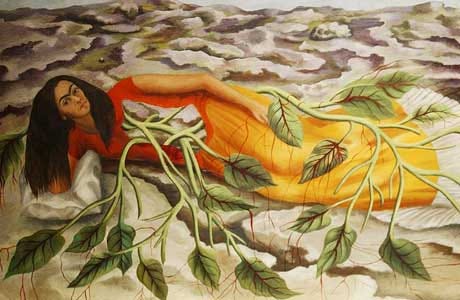
Adele’s 21 came from heartbreak. So did Joni Mitchell’s Blue. Taylor Swift built a career partly on alchemizing relationship pain into pop songs. Frida Kahlo painted her physical and emotional anguish. Sylvia Plath wrote Ariel in the final months before her suicide.
We call these “created from pain” as if the pain was the raw material, but the creating wasn’t about using the pain. It was about surviving it.
The art was a lifeboat, not a monument.
The creative impulse in ruin isn’t about making good art. It’s about making anything at all.
When you’re heartbroken, most of life becomes impossible. You can’t focus. You can’t make decisions. You can’t imagine a future. You can’t trust your judgment about anything.
The good thing is that you can still put words on a page, press paint onto canvas, and arrange sounds. These are concrete, controllable actions in a world that feels completely out of control.
The creative impulse isn’t “I should make art from this pain.” It’s “I need to do something with my hands and my mind because sitting still with this feeling is unbearable.”
Creating from heartbreak is a way of asserting agency when everything else has been taken from you.
Heartbreak is fundamentally disempowering. Someone else decided the relationship was over, or circumstances decided, or you decided, but the decision still shatters you. Either way, something happened to you that you couldn’t prevent.
Creation reverses that. You’re the one making decisions. You’re choosing the words, the colors, and the notes. You’re imposing your will on raw material.
That sense of agency, however small, however illusory, is psychologically crucial when everything else makes you feel powerless.
The anatomy of the creative impulse in ruin:
There’s a moment, usually days or weeks into heartbreak, when the acute shock fades slightly, and you realize, I have to do something. I can’t just lie here forever.
Most normal activities still feel impossible. Work feels meaningless. Social interaction feels exhausting. Simple decisions feel overwhelming.
But creating and making something from nothing, or from the pain, feels possible. Not easy. Not joyful. But possible.
The impulse has layers:
The documentation layer: Some part of you wants to record what you’re experiencing, as if making it external makes it less overwhelming. If it’s on the page, maybe it’s not just inside you, consuming you entirely.
The meaning-making layer: Suffering without meaning feels unbearable. Creating from pain is a way of imposing meaning; this hurt this much, but look, something came from it.
The control layer: You can’t control the heartbreak. But you can control the creation. You decide when to start, when to stop, and what it looks like.
The communication layer: Maybe someone else will understand. Maybe you can make them feel what you’re feeling. Maybe you’re not as alone as you feel.
The survival layer: If you can make something today, you exist today. You didn’t just endure. You produced. You’re still a person who does things.
Here’s my uncomfortable realization: creating from heartbreak doesn’t heal it.
This is where the romantic narrative falls apart. We want to believe that transforming pain into art resolves the pain. That creation is therapy.
Sometimes it helps. Sometimes it provides relief, distance, and perspective. Sometimes the act of shaping pain makes it feel more manageable, but often, it doesn’t. You create something from your heartbreak, and you’re still heartbroken. The making doesn’t fix the breaking. You’ve just produced something while broken.
The song doesn’t heal the heartache. The painting doesn’t mend the loss. The poem doesn’t bring them back. But what creation does is prove that you’re still capable of making things. That’s nothing, but it’s not healing.
The creative impulse in ruin can become its trap.
If creating from pain is the only time you feel productive, you might unconsciously resist healing. If your identity becomes “artist who creates from suffering,” you might cling to suffering.
I’ve seen this in myself and others: mining pain for material, documenting every stage of heartbreak, and turning suffering into content. At some point, you’re not processing grief, you’re performing it. Not for an audience, necessarily, but for yourself.
The creating becomes a way to avoid moving through the pain. As long as you’re making art about the heartbreak, you don’t have to let it go.
The most honest approach: create from heartbreak without expecting it to fix the heartbreak.
Make the thing because you need to make something. Because it gives you purpose for an hour. Because it exerts control in one small area when everything else is chaotic.
But don’t expect the making to heal you. Don’t expect the finished piece to resolve the pain. Don’t mistake documentation for processing.
Create from ruin because that’s what you do with your hands when you can’t hold anything together. Not because turning pain into something creates meaning, value, or makes it vanish.

The experienced, heartbroken creator still makes things out of pain. But they’ve learned that the making and the healing are separate processes. Creation helps you survive heartbreak. It doesn’t cure it.
When you’re in ruin, and you feel the impulse to create, follow it. Not because it will fix you, but because it will give you something to do besides hurting.
Make the thing. Don’t expect it to be good. Don’t expect it to heal you. Don’t expect it to make sense of the senseless.
Expect it to give you an hour when you do something other than collapse. That’s enough.
The anatomy of heartbreak includes destruction, yes. But also this: the strange, persistent impulse to make something, anything, from the pieces.
Not to rebuild what was broken. To prove you can still hold a tool, still shape raw material, still exist as someone who creates even when you’re someone who’s been destroyed.
Everything else is just romanticism about suffering that makes for a good narrative but a terrible lived experience.