


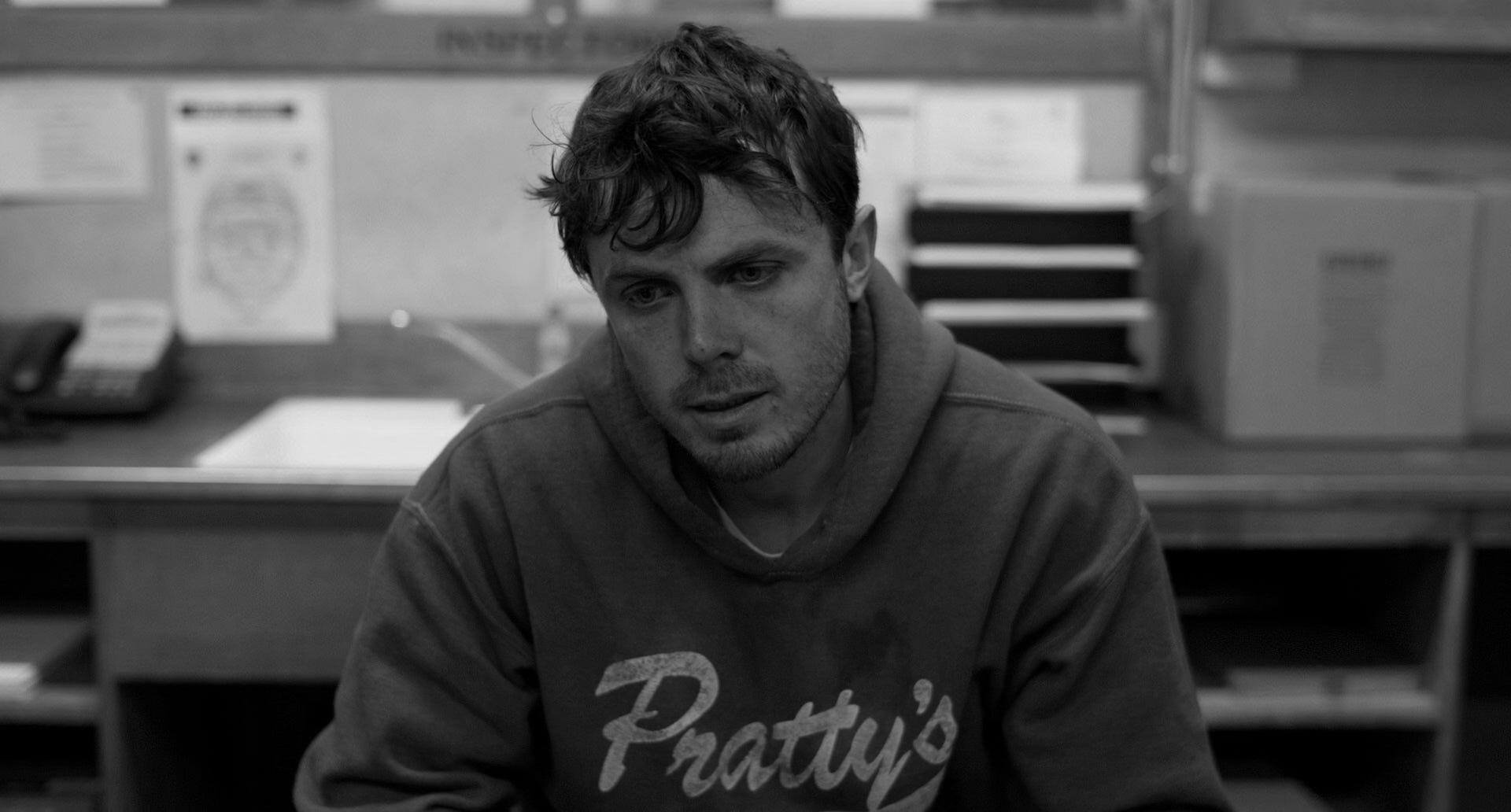
There's a moment near the end of Manchester by the Sea where Lee Chandler returns to his maintenance work after his brother's death, after all the funeral arrangements, after the crushing weight of his past collides with his present loss.
He doesn’t transform or find closure. He just… continues. Fixing boilers, unclogging toilets, and shoveling snow. The same mechanical tasks he did before, except now he’s doing them while carrying grief that would flatten most people.
The film refuses to reward his labor with healing. He works through his grief not because work helps him process it, but because he doesn’t know what else to do with his body during the hours he has to keep breathing.
I suggested a friend watch that film when his mother died, and I recognized him completely.
He had gone back to work three days after the funeral. He wasn’t ready, but he didn’t know what to do with himself at home, where her absence screamed from every corner. At least at work, there were tasks, things that needed doing, and as a man, he had problems that he could solve.
People called him strong. Later, he admitted to me that he wasn’t strong. He was just avoiding the alternative.
Our conversation turned philosophical (as most of our chats tend to be). Was he honoring his grief by continuing to work? Or was he bypassing it? Was productivity during profound loss ethical, or was it just socially acceptable avoidance?
It’s not the answer anyone wanted.
When someone experiences devastating loss, we have contradictory expectations: We want them to take time to grieve properly, but we also admire them if they “keep going” and “stay strong.”
We’re not sure which response is more virtuous.
We believe there’s a right way to grieve, and that working through grief might be cheating, taking the easy path of distraction rather than the hard path of feeling.
But watch what actually happens to people in profound grief: there is no right way. There’s just the desperate attempt to survive each day using whatever means available.
For some people, that means stopping everything; for others, continuing everything. Neither is more ethical than the other. Both are simply different strategies for not drowning.
We romanticize the idea of proper grieving, taking time off, focusing on your feelings, and really processing the loss as if grief were a project you could complete through dedicated effort, but grief isn’t a project; it’s a condition, and for many people, the most unbearable thing about grief is having nothing to do with the hours of consciousness you’re forced to endure.
Work, in that context, isn’t avoidance but survival.
Allow me to explain this with a few examples:
The doctor returns to their practice immediately after a personal tragedy. Not because they’re uncommonly strong, but because caring for others gives them a reason to get out of bed when their life feels meaningless.
The writer who produces their most prolific work in the year following a devastating loss. Not because grief fuels creativity romantically, but because constructing sentences gives them something to control when everything else is chaos.
The parent who maintains routines for their children despite their grief. Not because they’re suppressing their feelings, but because their children’s needs provide structure when internal structure has collapsed.
The question isn’t whether you should work through grief.
The question is, whose ethics are we applying?
There’s a cultural narrative that grief requires stillness and that continuing to produce during profound loss is somehow disrespectful to what you’ve lost. That real grief should render you nonfunctional, but that narrative serves people who can afford to stop. Those who have financial security, supportive systems, and jobs that allow extended leave. It’s a privileged ethic disguised as a universal one.
For many people, stopping isn’t an option, as bills don’t pause for grief, responsibilities don’t evaporate because you’re heartbroken, children still need feeding, and work still needs doing.
The ethics question isn’t “Should you work through grief?” It’s “Why do we judge people for surviving grief in the ways available to them?”
Working through grief isn’t one thing.
It has different meanings for different people.
For some, work is a genuine avoidance, a way to not feel what needs to be felt. They schedule every minute, so there’s no space for grief to surface. That’s not sustainable. Eventually, the unfelt grief will demand attention.
For others, work is a lifeline, not avoiding grief but surviving it. They feel the grief constantly. Work doesn’t prevent the feeling. It just gives them something to do while feeling it.
The difference matters: the first is suppression, while the second is endurance.
My friend couldn’t tell which one he was doing at first. Was he avoiding his mother’s death by working, or was he trying to make it through each day?
I helped him understand that grieving didn’t take a break.
The grief was omnipresent, in his chest, throat, and in the weight of his limbs. Work didn’t eliminate it. Work just gave him a reason to move his body through space during the hours he had to exist.
Most of us have to do just that!