



I want you to imagine, just for a moment, that we are sitting in a quiet room together. There may be a clock ticking on the wall, marking the seconds. It is a comforting sound to some, but for anyone who has carried a heavy psychological burden, a grief, a trauma, a heartbreak, that ticking can feel mocking. It represents the old, well-worn cliché we have all been fed since childhood: that Time heals all wounds.
But if we are being honest with one another, we know that is not strictly true. If Time were the only active ingredient in healing, then everyone who suffered a loss ten years ago would be perfectly whole today. We know that is not the case. We know people who are stuck in the amber of a moment that passed decades ago.
So, I would like to propose a different way of looking at this. I want to offer you a formula, a bit of psychological calculus. It goes like this: Healing equals Time plus Intention times Meaning Making.
Healing = Time + (Intention x Meaning Making)
Let’s break this down, because the way these variables interact is actually quite critical to understanding why some of us move forward, and others remain frozen.
We must start with Time, of course.
It is the first variable, but in my formula, it stands somewhat apart. In the clinical literature, we might refer to this as the necessary condition, but not the sufficient one.
Time is simply the vessel. It is the space in which the work happens, but it is not the work itself.
Imagine you have a broken leg. You can sit on the sofa for six weeks and let Time pass. Without a cast, without a doctor setting the bone, without physiotherapy, Time will indeed pass. The bone might knit back together, but it will likely heal crookedly. You will be left with a limp. The Time passed, but the healing was incomplete.
In a psychological sense, Time provides the distance necessary to lower our cortisol levels and allow our nervous system to come out of hyper-arousal. However, relying on Time alone is a passive strategy. It assumes that recovery is inevitable. Judith Herman once noted that ‘recovery can take place only within the context of relationships; it cannot occur in isolation.’ Time gives us the days and years to form those relationships, but it does not create them for us.
This brings us to the second variable: Intention.
This is where your agency comes online.
Intention is the decision to turn towards the pain rather than away from it. It is an act of immense bravery. Most of our biological programming is designed to make us avoid pain. If you touch a hot stove, you pull your hand back. If you have a painful memory, your psyche’s reflex is to repress, distract, or numb.
Intention is the cognitive override of that reflex. It is you waking up in the morning and saying, ‘I am going to feel this today so that I do not have to feel it forever.’
This is where the concept of ‘active grieving’ or ‘active recovery’ comes into play. It implies that you are not just surviving the aftermath of an event; you are participating in your restoration.
You are going to therapy, you are journaling, you are having the difficult conversations, or perhaps you are simply allowing yourself to cry without apology.
There is a quote by the poet Robert Frost that I return to often: ‘The best way out is always through.’
Intention is the commitment to go through. Without intention, we are merely floating downstream. We might eventually wash up on a shore somewhere, but it might not be the shore we wanted to reach.
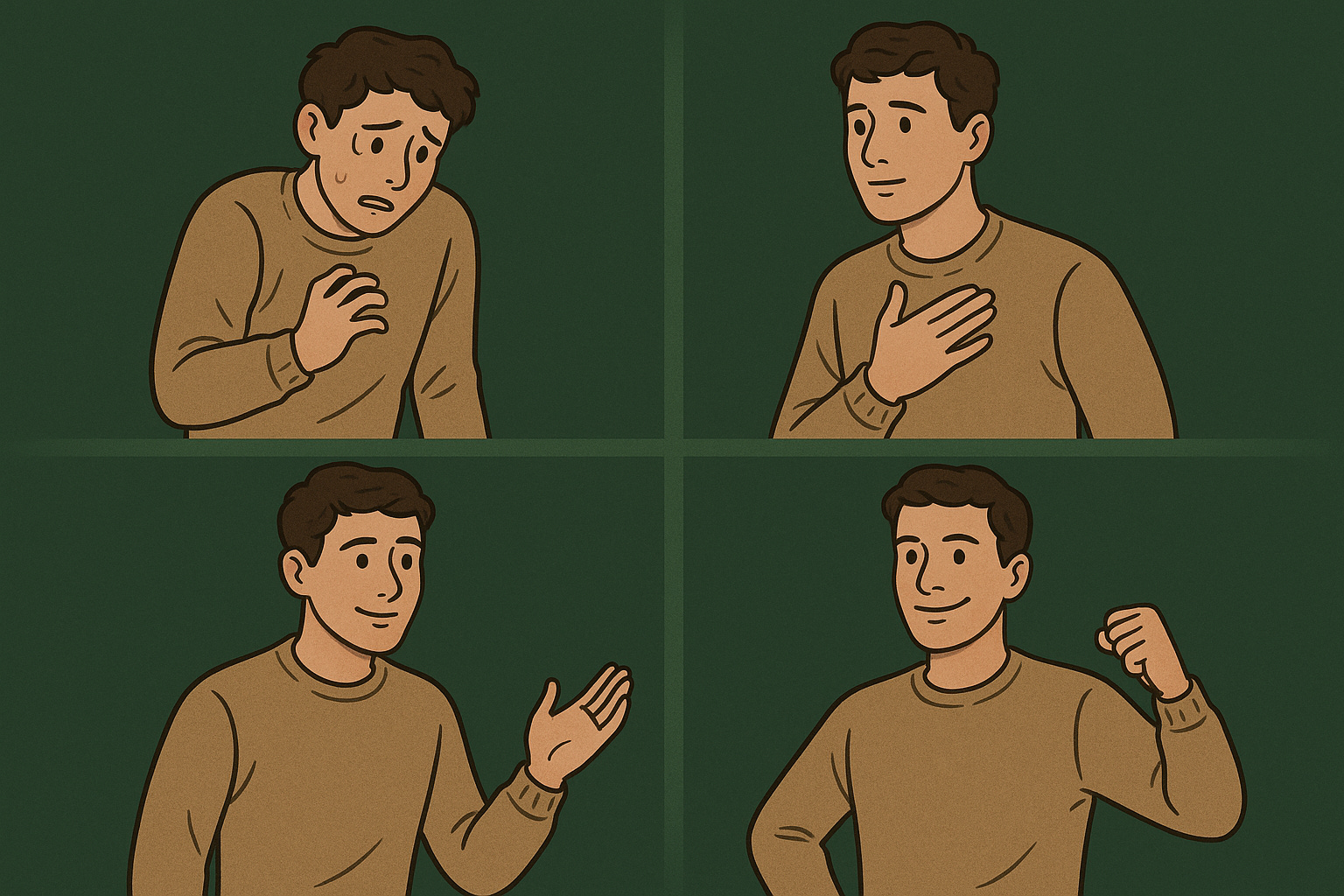
Now, look at the formula again. You will notice I did not say Intention plus Meaning Making. I said Intention multiplied by Meaning Making.
This is the most crucial part of our discussion.
In psychology, we talk a great deal about ‘narrative identity’.
This is the internal story you tell yourself about who you are and what has happened to you. Human beings are meaning-making machines. We cannot tolerate chaos; we have to organise our experiences into a story.
When trauma or profound loss occurs, it shatters our existing story. It violates our fundamental assumptions about how the world works, that the world is safe, that good things happen to good people, or that we are in control. Meaning-making is the reconstruction of that story.
I want to be very clear here about what meaning-making is not. It is not the toxic positivity of saying ‘everything happens for a reason’. Sometimes, terrible things happen for no reason at all. To force a silver lining on a tragedy is often insulting to the pain.
Instead, meaning-making is the process of integrating the event into your life. It is moving from the question ‘Why did this happen to me?’ to ‘Now that this has happened, who do I choose to become?’
Researchers call this Post-Traumatic Growth. It does not deny the suffering, but it suggests that the struggle with a crisis can catalyse positive change. Perhaps you have become more empathetic to the suffering of others. You may have clarified your values. Maybe you have realised, with striking clarity, that you are stronger than you ever imagined.
This is why I use multiplication in the formula. If your Meaning Making is zero, if you view your pain as entirely senseless, purely damaging, and devoid of any narrative progression, then no amount of Intention will get you to the highest levels of healing. You will just be working hard on a treadmill.
But you can have all the intellectual Meaning in the world. You can understand the theory of your pain perfectly. You can analyse your childhood with the precision of a surgeon. But if you lack the intention actually to feel the emotions and do the work, if you treat your life as a research project rather than a lived experience, the result is diminished as well.
You need the active will (Intention) interacting with the cognitive restructuring (Meaning) to produce the result.
So, where does this leave us?
It leaves us with a roadmap. It suggests that if you are feeling stuck, look at the equation to see which variable is missing.
You may have been relying too much on Time. You have been waiting for the calendar to do the heavy lifting, hoping that next year will be better than this year. If that is the case, I invite you to step into Intention. Reclaim your agency. Decide that you are the author of this next chapter.
Or perhaps you have been working incredibly hard. You have the Intention; you are exhausted from trying to heal. Yet, you feel like you are spinning in circles.
In that case, look at the Meaning. What is the story you are telling yourself? Is it a story of permanent damage, or is it a story of adaptation? Are you the victim in your narrative, or are you the survivor?
We must be patient with ourselves, of course. We cannot rush the Time variable. We cannot force the Meaning before we are ready; sometimes, in the immediate aftermath of a tragedy, there is no meaning to be found, only survival. And that is perfectly acceptable.

But eventually, as the sharp edges of the pain begin to dull with the passage of days and months, we have an opportunity. We can step into the equation. We can combine our will to recover with our capacity to understand, and in doing so, we do not just wait for healing to happen to us. We build it.
I hope you see that this isn’t just an academic exercise. It is a permission slip. It is permission to stop watching the clock and start engaging with the process. Because you are not defined by what happened to you in the past. You are determined by the intention you bring to your present and the meaning you make for your future.
Thank you for reading. Your time and attention mean everything. This essay is free, but you can always buy me coffee or visit my shop to support my work. For more thoughts and short notes, please find me on Instagram.
Thank you so much for sharing! Such profound insights and love the formula. This resonated deeply, 'But if you lack the intention actually to feel the emotions and do the work, if you treat your life as a research project rather than a lived experience, the result is diminished as well.'