


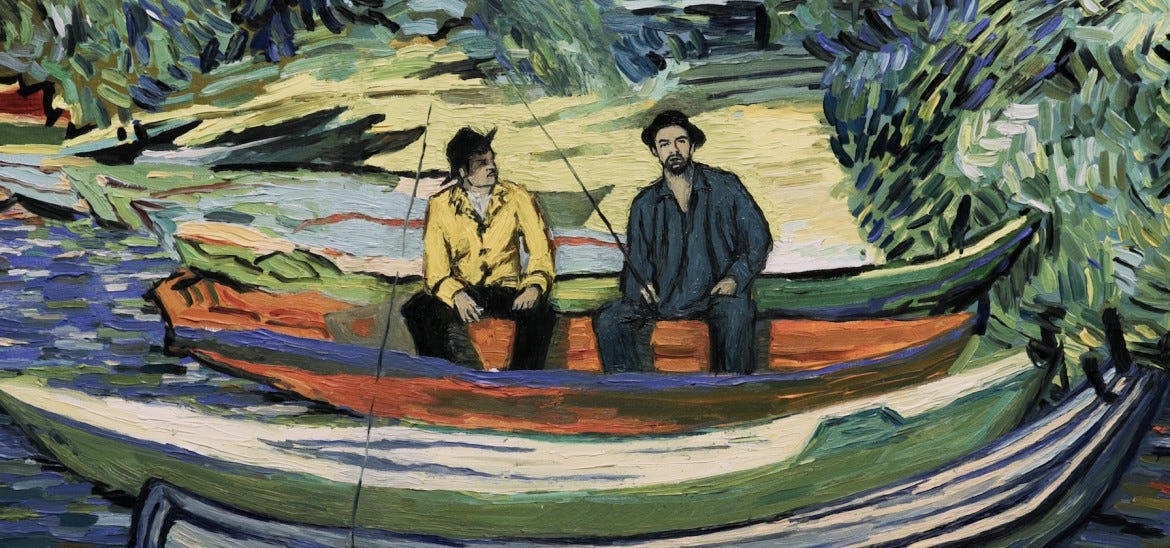
If you were to ask me who my favorite artist is, I would tell you, Van Gogh. I am not saying this like any naive, pretentious young person of my generation who can name two paintings aside from the Mona Lisa.
I am passionate about Van Gogh for his life and dedication to artistry, and for the guilt that it brought, which kept him away and, in the end, killed him.
Why? Well, his art career was brief, lasting only 10 years, from age 27 to 37, and he died poor, living on his brother Theo’s stipend. Before committing to art, he was a school teacher in England, a clerk in a bookstore in the Netherlands, a missionary preacher in Belgium, and an art dealer in Paris.
That is relatable for any creative of my generation; we hustle and take different paths before settling.
Vincent wasn’t born a master; he worked for it. He learned to paint and draw in The Hague, where he took lessons from his cousin-in-law, Anton Mauve. He studied in Antwerp and moved to Paris to take lessons at Fernand Cormon's studio.
As creatives, how many of us were helped by our families along the way? His uncle gave him his first commission: twelve drawings of city views in The Hague.
Before sharing what I admire about him, let me share the core part of his life: his relationship with his brother.
The true core of Vincent’s survival and his eventual tragedy was his younger brother, Theo.
Theo wasn’t just his brother; he was his financial patron, art dealer, emotional anchor, and closest confidant.
To ease Vincent’s overwhelming guilt about living on a stipend, they framed the money as a business arrangement: Theo was buying Vincent’s output, which he would sell as an art dealer in Paris. Vincent agonized over draining Theo financially, constantly promising in letters that his work would one day pay him back.
For two chaotic years (1886–1888), they lived together in Paris. But Vincent was intense, erratic, and argumentative, turning their apartment into a messy studio, while Theo was quiet, frail, and stressed. Living together exhausted them both, prompting Vincent to seek quiet elsewhere:
“It seems to me almost impossible to be able to work in Paris, unless you have a refuge in which to recover and regain your peace of mind and self-composure. Without that, you’d be bound to get utterly numbed.”
Theo also couldn’t stomach living with his brother. In a letter to their sister Wilhelmina, Theo writes, “He loses no opportunity to show that he detests me and that I repel him. This makes it almost unbearable for me at home.”
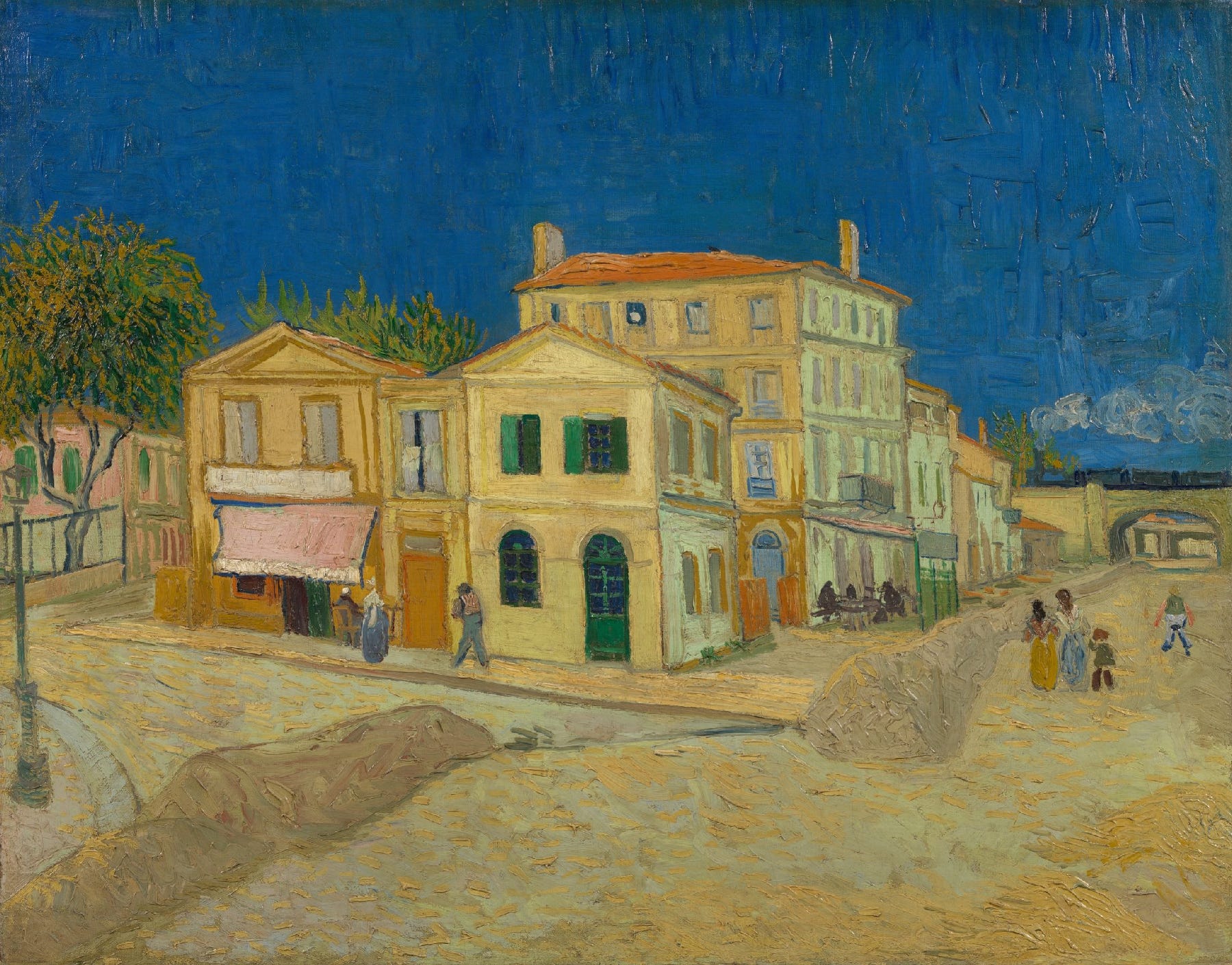
Vincent moved south to Arles, seeking light and solace, but he hated the solitude. Desperate for community, he convinced Theo to pay painter Paul Gauguin to join him at The Yellow House:
“You know I’ve always thought it ridiculous for painters to live alone. You always lose when you’re isolated.”
— Vincent to Theo, Arles, May 1888
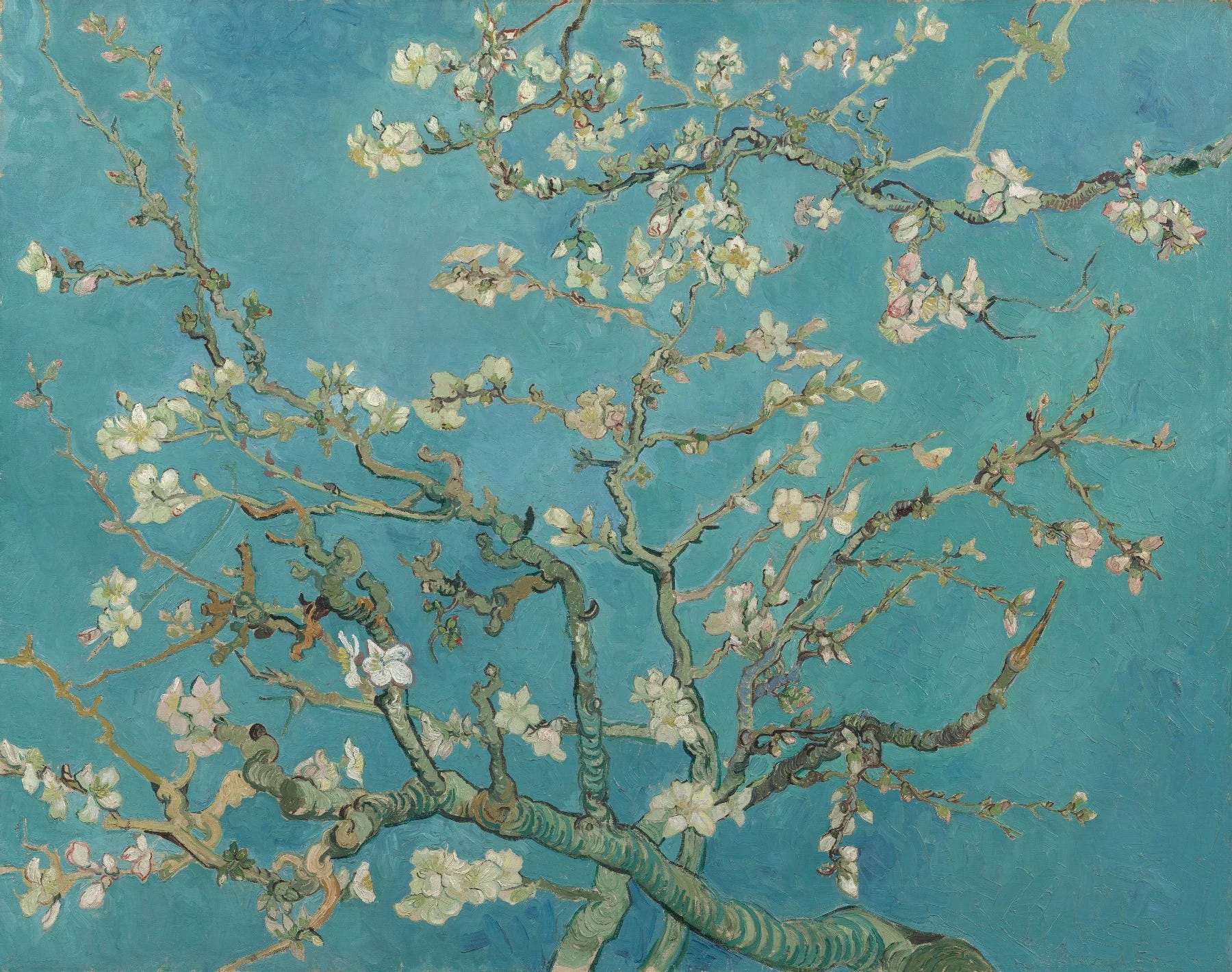
Despite his collapsing mental state, Vincent’s obsession resulted in unimaginable output. During his asylum stay in Saint-Rémy, he produced around 150 paintings in a single year, including masterpieces such as Almond Blossom.
“As for me, my health is good, and as for the head it will, let’s hope, be a matter of time and patience.”
— Vincent van Gogh to Theo van Gogh, Saint-Rémy-de-Provence, May/June 1889
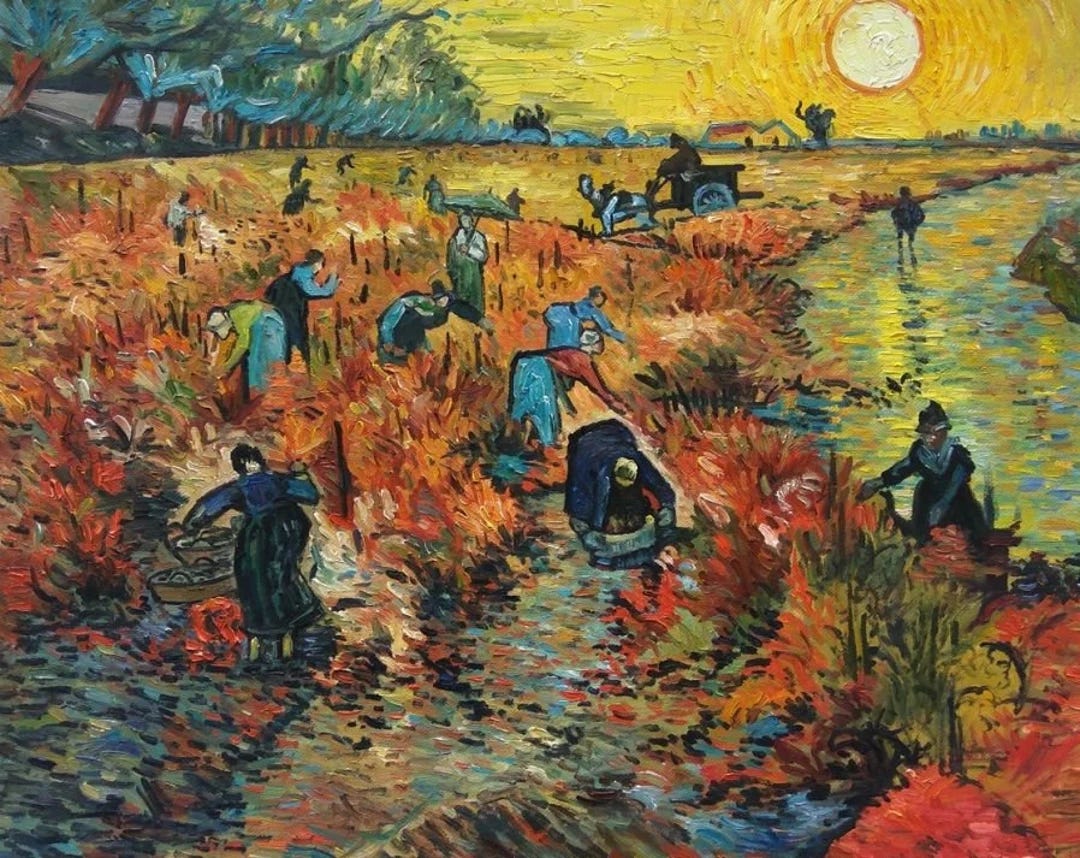
Near the end, the world was finally starting to notice. Theo had been submitting Vincent’s paintings to the annual Salon des Indépendants in Paris since 1888. The art critic Albert Aurier published a glowing review, and The Red Vineyard became one of the few paintings Vincent sold during his lifetime.
When ten of his works were exhibited at the Indépendants in March 1890, the response was electric:
“How pleased I would have been if you’d been there at the Independents’ exhibition… Your paintings are well placed and look very well. Many people came up to ask me to give you their compliments. Gauguin said that your paintings are the key to the exhibition.”
— Theo to Vincent, Paris, 19 March 1890
Just as recognition was within reach, the pressure peaked.
Theo got married and had a newborn son, whom he named Vincent Willem. Fearing he was now a financial burden on Theo’s growing family, Vincent’s mental health spiraled.
On July 27, 1890, Vincent shot himself in a field in Auvers-sur-Oise. Theo rushed to his side, and Vincent died two days later in his arms, leaving behind his final words: “The sadness will last forever.”
The grief broke Theo completely. Suffering from advanced illness (he had syphilis) and a broken heart, Theo died just six months later, at age 33.
Today, they lie side by side in Auvers-sur-Oise beneath a bed of intertwining ivy, two brothers bound by an artistic devotion that destroyed them yet gave the world an immortal legacy.
How much did Theo spend on his brother? It is estimated that Theo spent about $18,000 over the course of Vincent’s life, which, adjusted for inflation, is about $400,000 today. Well, that is some pretty, pretty, pretty investment.
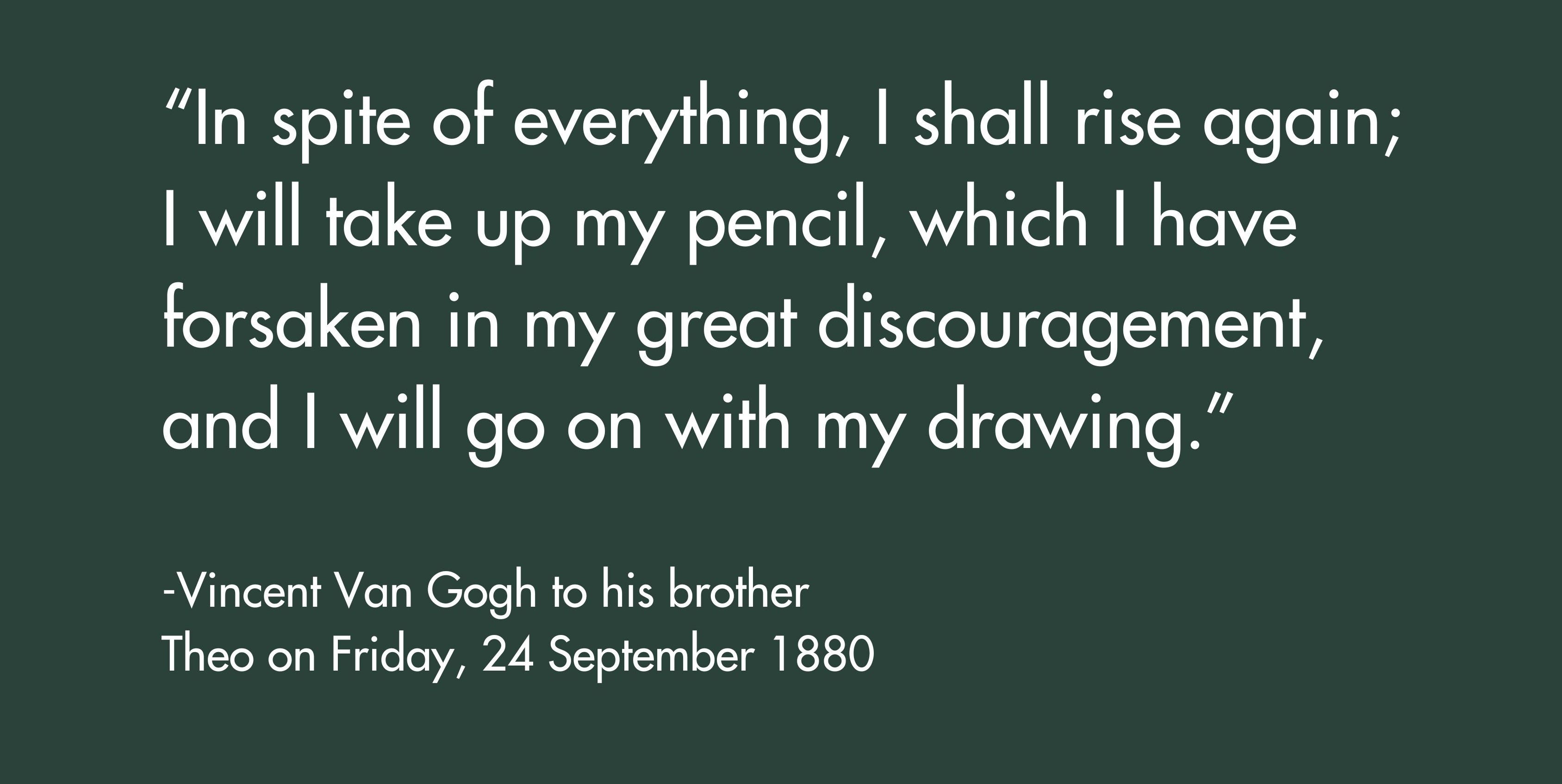
As promised, beyond his biography, here are three specific qualities about Vincent that make him my favorite artist:
His Unapologetic Work Ethic: He didn’t wait for “inspiration” or pretend talent was magic. He treated art like a brutal craft, working tirelessly through rejections, poverty, and isolation to produce over 850 paintings and almost 1,300 works on paper in just ten years. I counted, and for a 10-year career, that is about 4 pieces every week.
His Vulnerability and Rawness: In an art world that often prized polish and pretense, Vincent painted his emotional state directly onto the canvas. Whether it was the dizzying swirls of The Starry Night or the intense gaze in his self-portraits, he wore his soul on his sleeve.
His Capacity to Find Beauty in Suffering: Even when confined to an asylum or overwhelmed by mental breakdown, he looked out his window and saw vibrant yellow sunflowers, blooming almond branches, and glowing night skies. He transformed personal anguish into warmth and light for the rest of us.
Looking back on Vincent’s life, it becomes clear that while art and letters were shared openly between the two brothers, the weight of guilt was Vincent’s alone to carry. No matter how many reassuring words Theo wrote, or how deeply he tried to cushion Vincent from the world, the heavy darkness of feeling like a burden remained an immovable shadow.
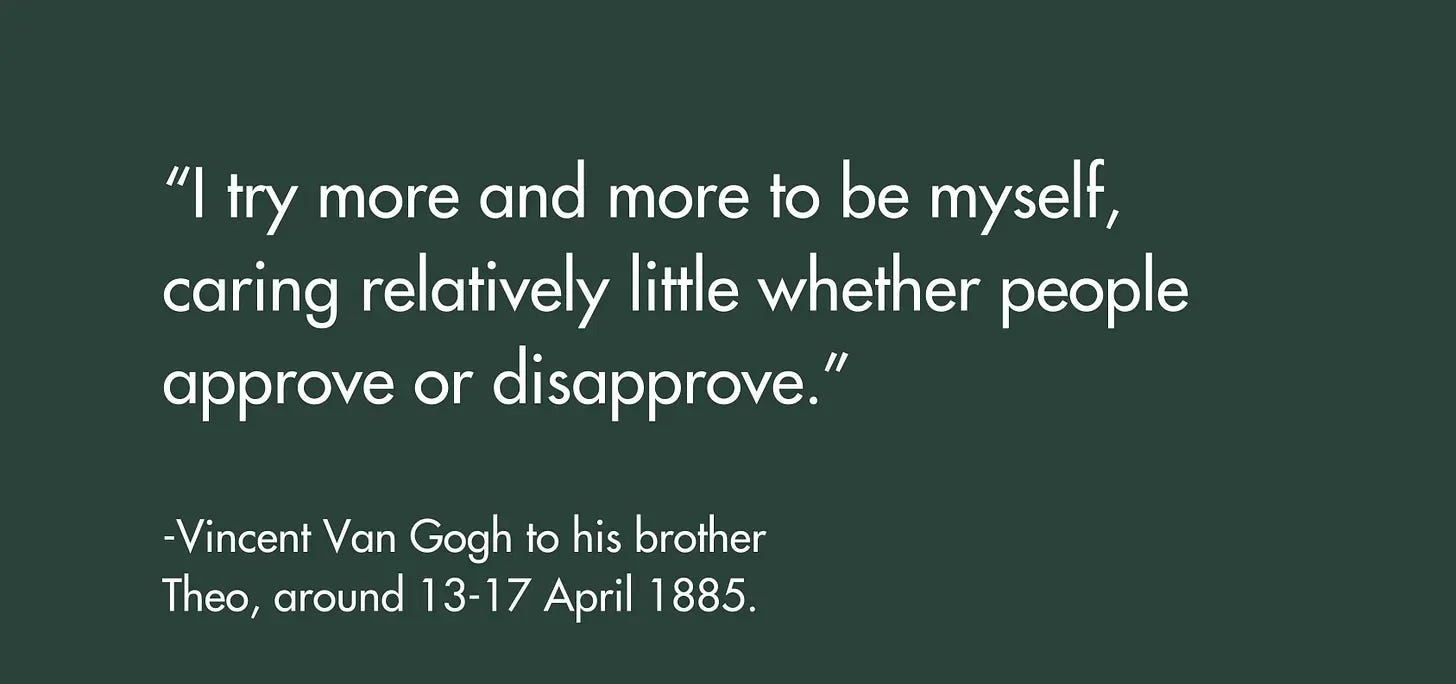
Yet, that is precisely what makes his story so profound for our generation. Vincent was not a distant, flawless myth. He was a restless hustler who started late, failed often, relied heavily on family grace, and fought a daily battle against his own mind.
His final tragedy lies in the irony that the very world which once felt too heavy for him now draws infinite comfort from his work.
In transforming his private anguish into sweeping swirls of color, Vincent proved that even in our deepest isolation, we are capable of leaving behind undeniable warmth and light, and if you have read anything I have written, that is my why, too.
Thanks for reading! This newsletter is free, but if you’re feeling generous, you can support my work by sharing it with a friend, buying me a coffee, or checking out more on Twitter and Instagram.