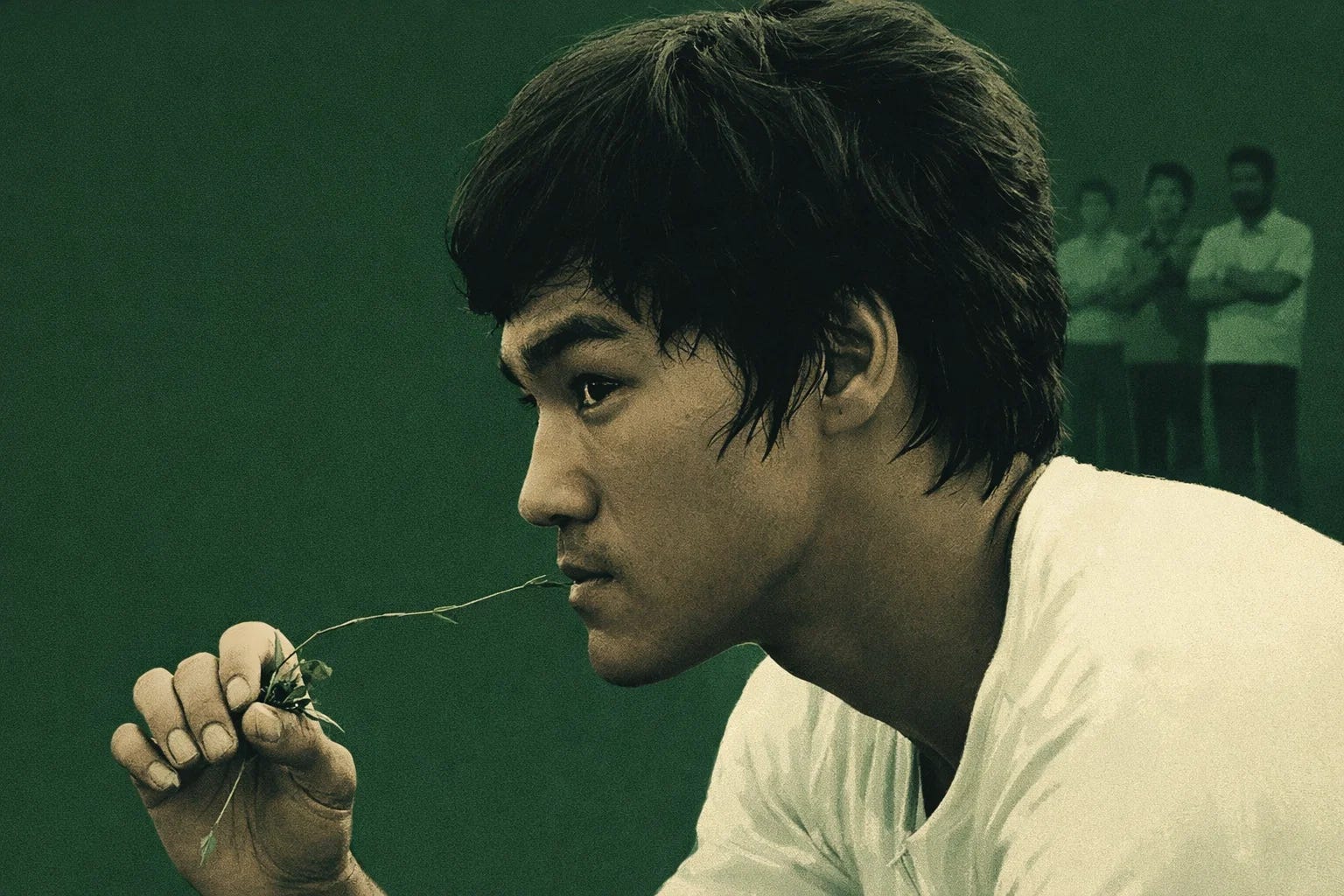
Bruce Lee’s most famous teaching comes from a television interview where he said, “Empty your mind. Be formless, shapeless, like water. You put water into a cup, and it becomes the cup. You put water into a bottle, and it becomes the bottle. You put it into a teapot, and it becomes the teapot. Now water can flow or crash. Be water, my friend.”
This sounds poetic but vague. What does it actually mean to empty your mind? And why would you want to?
What a full mind looks like
Before understanding emptiness, notice what fullness feels like.
Your mind is full when it’s crowded with preconceptions, rigid plans, fixed ideas about how things should be, constant internal commentary, and attachment to specific outcomes.
A full mind approaches a conversation already knowing what you’ll say. It updates its beliefs based on new information by comparing it with what it already believes. It encounters problems when it reaches for familiar solutions. Everything gets filtered through your existing patterns, your habitual responses, your preferred narratives.
This fullness feels safe because it’s predictable. You know who you are, what you think, and how you do things, but it’s also limiting. You can only respond in ways your full mind already knows. You’re trapped in your own patterns.

The empty mind in action
An empty mind isn’t blank or passive. It’s receptive and responsive. It meets each situation fresh, without dragging in past experiences or future worries. It can adapt because it’s not tied to a single form.
Watch a skilled martial artist sparring. They’re not thinking “now I’ll do technique A, then technique B.” They’re responding to what’s actually happening in real-time. Their training has become automatic, freeing their mind to be empty, present, and responsive rather than planning and controlling.
Or watch an improvising jazz musician. They’re not playing a memorized piece. They’re responding to what the other musicians are doing, to the energy in the room, to what wants to emerge in this moment. Their technical skill allows them to empty their mind of “what should I play” and instead be present to “what wants to be played.”
To me, that is what an empty mind represents.
Natalie Goldberg describes this in writing: “When you write, don’t think. Don’t try to control it. Let it come.”
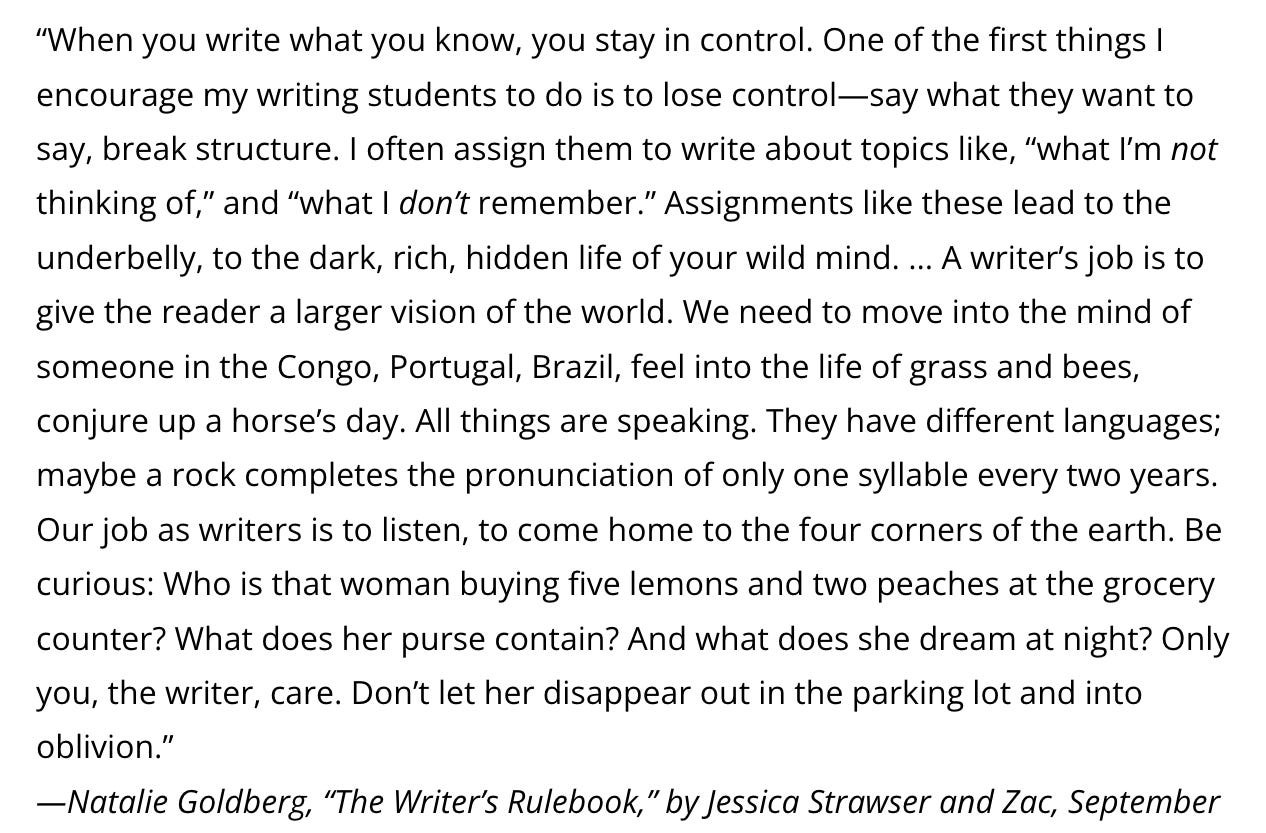
The empty mind writes what wants to be written rather than forcing what you think should be written.
Why emptiness matters
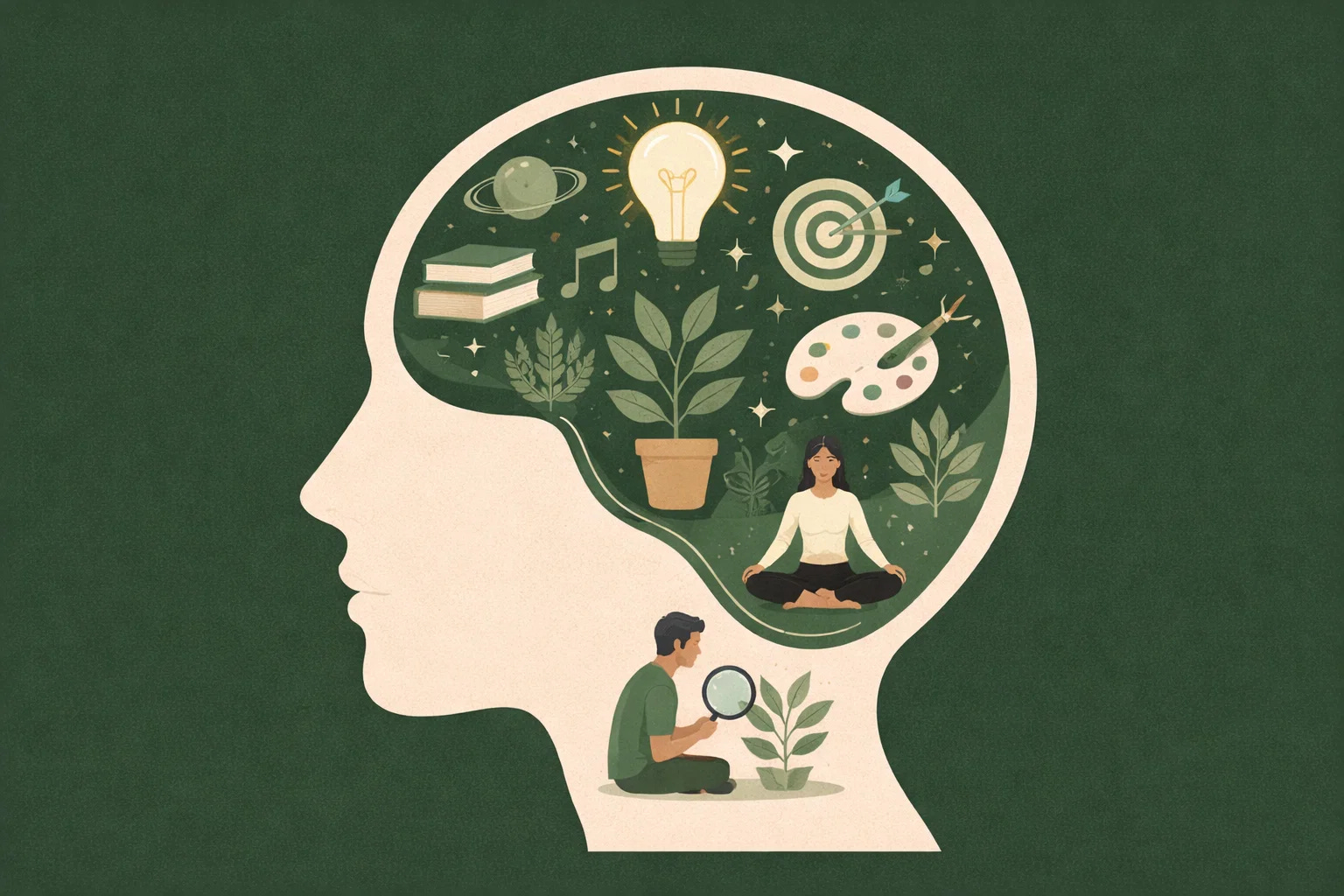
A full mind can only give you what you already have. An empty mind can receive what’s new. This matters in several ways.
In learning, an empty mind can actually absorb new information. The Zen saying captures this: “The cup must be empty to be filled.” If your mind is already full of what you think you know, there’s no room for learning.
You’ll interpret everything new through your existing understanding, which means you never really learn; you reinforce what you already believe.
In relationships, an empty mind can actually listen. Most people don’t listen; they wait to talk. Their mind are full of their own thoughts, opinions, and what they want to say next.
An empty mind creates space for the other person’s words, their meaning, their experience. Real connection happens in that emptiness.
In problem-solving, an empty mind can find novel solutions. When you approach a problem with a full mind, you reach for familiar solutions. Often, these don’t work; if they did, the problem would already be solved.
An empty mind can see new possibilities precisely because it’s not committed to old patterns.
In conflict, an empty mind can respond appropriately rather than reactively. When someone attacks you verbally, and your mind is full of defensiveness, old wounds, and your narrative about who’s right, you react from that fullness, probably escalating the conflict.
An empty mind can receive what’s actually happening and respond to this specific situation rather than to your accumulated past.
How to empty your mind
This isn’t about stopping thoughts or achieving some mystical state. It’s about reducing attachment to your thoughts, beliefs, and habitual patterns so you can be more present and responsive.
Notice when your mind is full.
You’re having a conversation, but you’re not really listening because you’re planning what to say next. You’re facing a new situation, but you’re applying old solutions. You’re so attached to being right that you can’t consider other perspectives. These are signs of fullness.
Practice presence.
When you’re washing dishes, wash dishes. When you’re walking, walk. Don’t be somewhere else in your head. This simple practice of being where you are gradually empties the mind of its constant elsewhere-ness.
Let go of outcomes.
The more attached you are to specific results, the fuller your mind becomes with plans, worries, and attempts at control. The paradox is that loosening your grip on outcomes often makes you more effective because you can respond to reality rather than forcing your preferred version.
Question your certainties.
Every time you think “I know how this works” or “This should be done this way,” ask yourself: Do I actually know, or is this just familiar? The empty mind holds knowledge lightly, ready to update when reality shows something different.
Distinguish between technical knowledge and mental fullness.
Bruce Lee wasn’t saying to forget your training. He trained obsessively, but during actual fighting, he emptied his mind so the training could flow naturally, rather than being blocked by conscious thought.
You need skill, but you also need to get out of your own way when it’s time to use it.
Be water
Water doesn’t resist. It doesn’t insist on being a particular shape. It meets whatever container it encounters and takes that form, but it remains water; it doesn’t lose its essential nature.
This is what the empty mind does. It adapts to situations without losing itself. It responds to what’s needed without forcing predetermined patterns. It flows when appropriate and crashes when required. All of this becomes possible when the mind isn’t full of rigid ideas about what should be.
The philosopher Alan Watts, who influenced Bruce Lee, said, “Muddy water is best cleared by leaving it alone.”
When your mind is full and turbulent, you can’t force it to be empty, but you can stop filling it. Stop adding more thoughts, more plans, more should-be’s. Let it settle. Let it be clear. Let it become empty enough to receive what’s actually here.
My theme for this year is slowing down, and the most significant part of it is learning to empty my mind.
Emptying your mind doesn’t mean not thinking.
It means don’t let thinking trap you in rigid patterns. Don’t let your experience blind you to the reality you face. Don’t let your expectations prevent you from responding to what’s actually happening.
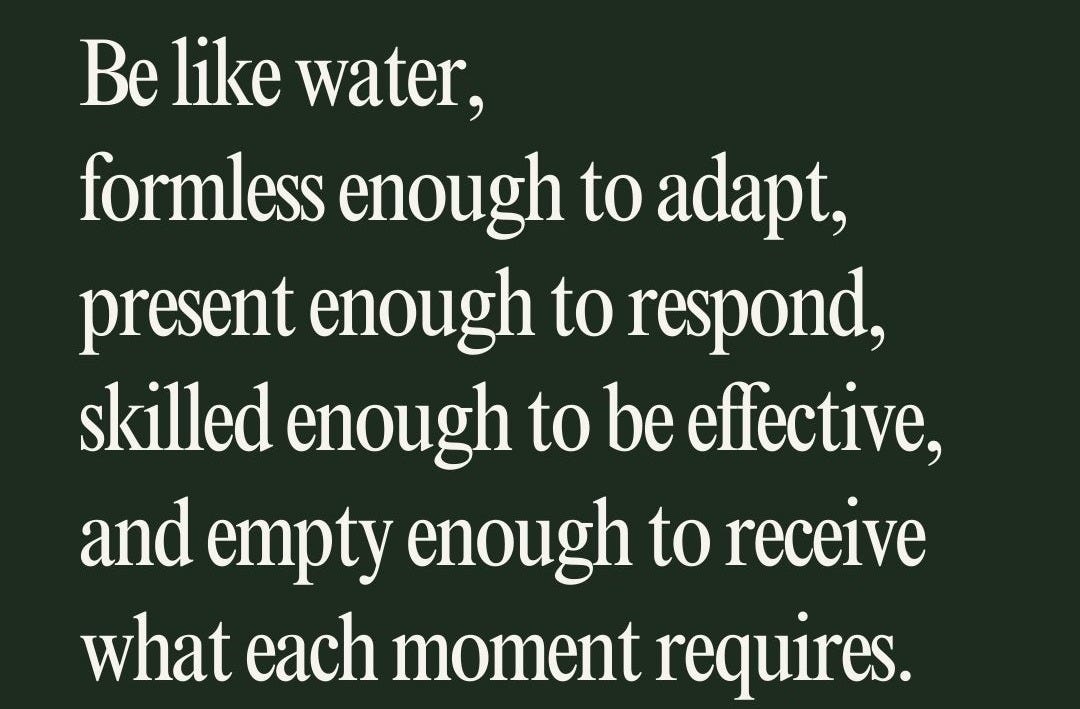
Be like water, formless enough to adapt, present enough to respond, skilled enough to be effective, and empty enough to receive what each moment actually requires.
The empty mind isn’t weak or passive. It’s the most powerful state possible because it can meet reality as it is rather than as you wish it to be.