


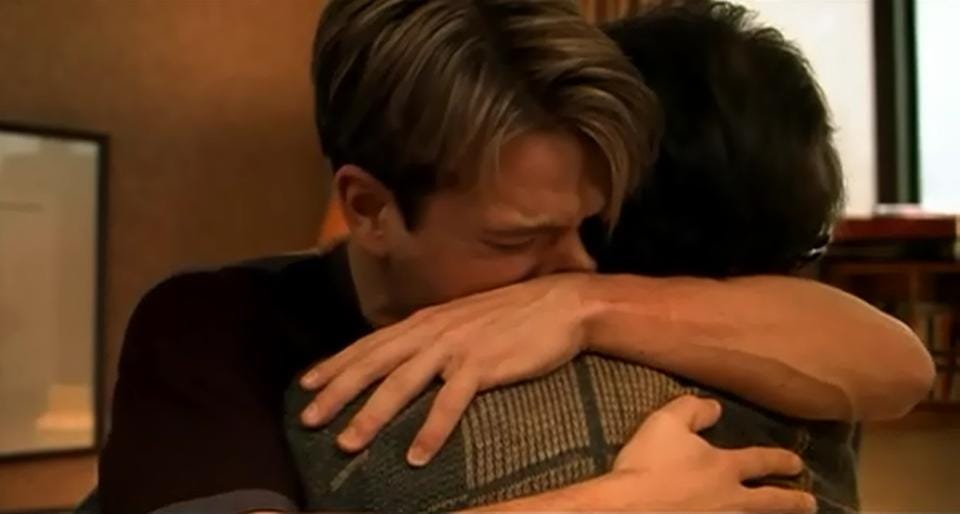
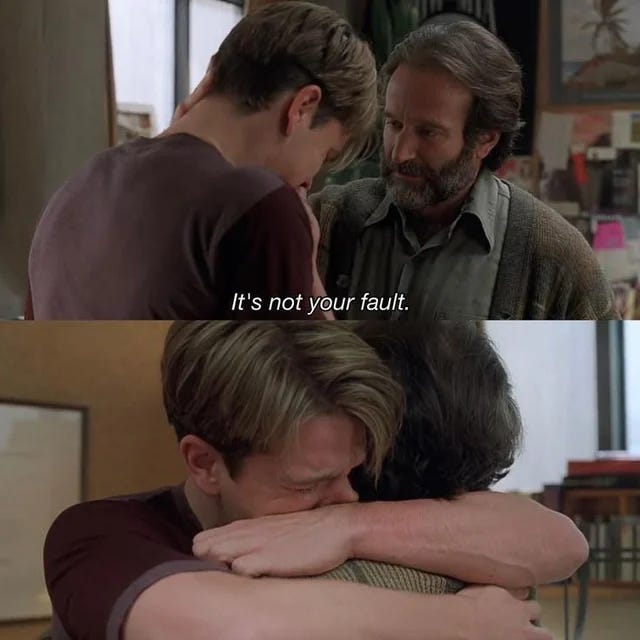
There’s that famous scene where Robin Williams keeps repeating “It’s not your fault” to Matt Damon’s character until Will breaks down completely, sobbing into his therapist’s shoulder.
It’s cathartic to watch.
We feel the emotional release and sense healing happening.
The scene’s power isn’t in the crying, though. It’s in the cognitive shift that the crying represents. Will is accepting a new understanding of his past.
The catharsis works because it’s coupled with reframing.
I used to believe that expressing pain was itself healing. That if I could get the feeling out, through crying or writing or creating, I’d feel better. That catharsis was the cure.
I wrote angry essays about betrayal. I cried for hours about grief. I wrote about my pain in newsletters. I guess now you know how this newsletter started. And I felt temporary relief each time, like the pressure being released from a wound.
The relief never lasted. Days later, sometimes hours later, the same pain returned at the same intensity. I’d express it again. Same relief. Same return.
I was in a catharsis loop: expressing pain repeatedly without actually healing from it.
When we’re in pain, we’re told that expressing it is crucial. Don’t bottle it up. Get it out of your system.
We believe catharsis, the purging of difficult emotions, is itself therapeutic. That expressing pain diminishes it.
Watch what actually happens to people who express pain without other interventions. They express it endlessly. The pain doesn’t diminish but gets rehearsed.
The catharsis feels good in the moment. Relief, release, the sense of having done something. It doesn’t change the underlying structure that generates the pain.
We romanticize cathartic expression because it feels like progress. The artist who channels their pain into raw work. The writer who pours their wounds onto the page. The person who has a big cry and feels purged.
Catharsis without cognitive change is just emotional ventilation. It reduces pressure temporarily. It doesn’t address why the pressure keeps building.
Aristotle wrote about catharsis in tragedy. The audience experiences vicarious emotional purging by watching terrible things happen to characters. He believed this was psychologically beneficial.
Modern psychology has complicated that view. Studies on catharsis show mixed results. Sometimes expressing anger makes you angrier. Sometimes dwelling on sadness deepens it. Sometimes talking about trauma retraumatizes rather than heals.
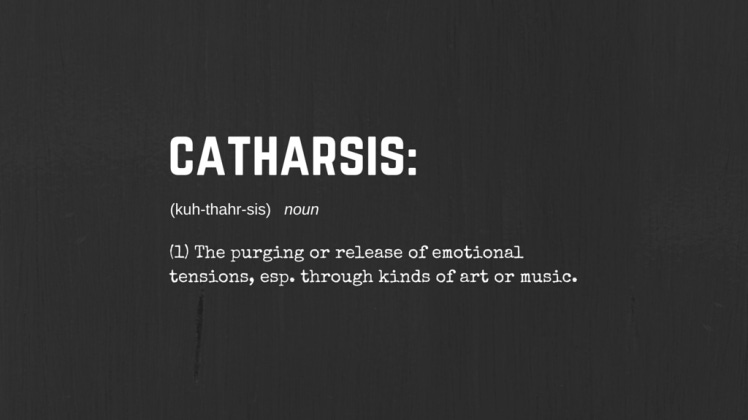
Expression alone doesn’t guarantee healing. Occasionally, it reinforces the neural pathways associated with the pain.
I had a friend who wrote about their childhood trauma constantly. Poems, essays, and memoir fragments. Powerful and honest work.
Twenty years later, the pain was undiminished. They’d expressed it thousands of times. They’d never processed it in a way that actually integrated or resolved it.
The expression had become the relationship to the pain. They were a person who writes about this trauma. That identity was built on the wound staying open.
Catharsis had trapped them in permanent rehearsal.
In Good Will Hunting, Will’s breakthrough is beyond the emotional release. It’s what “It’s not your fault” dismantles. He’d been carrying the belief that his childhood abuse was somehow his responsibility. The catharsis works because it accompanies the collapse of that belief.
Expression plus cognitive reframe equals healing.
Expression alone equals temporary relief.
When I finally made progress with my grief, it wasn’t because I cried more. I’d cried plenty.
I remember telling my fiancée then that I didn’t need talk therapy because the therapist's work would be to reframe what the past means, and I would rather not share that with someone I don’t feel safe with.
Therapy helps in taking the same feeling and giving it a different meaning.
The reframe changes everything.
Epictetus wrote in the Enchiridion that people are disturbed not by things, but by the views they take of them. That single line contains the whole argument. Pain is generated by interpretation. Change the interpretation, and the pain changes with it. No amount of expression alters the interpretation on its own.
Expressing pain feels productive because you’re doing something, and you need honesty to avoid suppressing what is inside.
Sometimes cathartic expression lets you avoid the harder work of examining why you’re in pain and whether the beliefs generating that pain are accurate.
It’s easier to cry about rejection than to examine whether your interpretation of the rejection is true. It’s easier to rage about injustice than to consider what you can actually control.
Catharsis can become a way to feel like you’re addressing the problem while rehearsing your emotional response to it.
Fresh grief needs expression.
You need to cry, to feel it, to let your body process the loss. Suppressing that is harmful.
Grief that’s been expressed hundreds of times without diminishing might need something different.
What belief is keeping this pain alive? What meaning are you assigning to the loss that keeps it devastating? The same applies to anger that keeps returning to the same trigger. At some point, the question shifts from how do I release this to why does this keep regenerating?
The catharsis trap is treating all pain as needing expression when some of it needs cognitive work instead.
Artists often talk about working through pain by creating. Sometimes that works.
The creative process helps them understand and integrate difficult experiences.
Sometimes it just produces art that rehearses pain without resolving it. The artist expresses the same wound in piece after piece, never healing, performing their suffering for an audience.
The art can be powerful. If the artist is still in the same pain twenty years later, the creative catharsis hasn’t healed them. It’s documented their inability to heal.
If you are to stay with something, here it is:
Healing requires changing your relationship to the pain, not just expressing it.
You express the pain. Then you examine it. What belief is underneath this feeling? Is that belief accurate? What would change if you believed something different?
You feel the grief. Then you ask what you’re making this loss mean about you, about the world. Is that meaning necessary? Could you assign a different meaning?
You release the anger. Then you question whether the expectation being violated is one worth holding.
Pain isn’t a substance you can fully drain. It’s generated by beliefs and interpretations. If those don’t change, the pain regenerates no matter how much you express.
You can cry for years about abandonment without healing if you never examine the belief that being abandoned means you’re unlovable.
You can create art about your pain forever without resolution if you never examine what you’re making the pain mean about who you are.
When you’re in pain and you’ve expressed it many times without healing, don’t express it again.
Ask what you’re making it mean. Ask what belief is generating the feeling. Ask whether that belief is true.
Catharsis has its place, but it’s not a cure but a pressure release.
The healing comes from what you do with the clarity that follows.