


We’ve been taught that lowering your standards is the beginning of mediocrity.
High achievers have high standards. Excellence requires uncompromising expectations.
“Never settle” is the motto.
Lowering the bar sounds like giving up, like admitting defeat, like accepting less than you’re capable of, but this thinking confuses having standards with having impossible standards. It mistakes perfectionism for excellence.
And it ignores a crucial truth: sometimes lowering the bar is exactly what enables you to achieve more, not less.
When High Bars Become Barriers
High standards are meant to motivate you to do better work. But past a certain point, they become barriers to doing any work at all.
You want to write, but your standard for what counts as “good enough to publish” is so high that you never finish anything.
You want to exercise, but your bar is set to an “intense 60-minute workout,” so you skip days when you only have 20 minutes.
You want to start a project, but your vision is so perfect that beginning with an imperfect version feels like failure.
The bar that’s supposed to pull you upward is actually keeping you from moving forward. You’re so focused on doing it right that you’re not doing it at all. This is when lowering the bar becomes strategic rather than a matter of settling.
The author G.K. Chesterton wrote, “If a thing is worth doing, it is worth doing badly.”
He meant that doing something imperfectly is better than not doing it at all, because you’re waiting for perfect conditions or perfect execution.
The Power of the Lower Bar
Lowering your bar creates immediate benefits that high bars prevent.
It enables starting: A high bar means you need perfect conditions, maximum energy, and clear vision before beginning. A lower bar means you can start now, with what you have, in whatever state you’re in. Starting imperfectly beats not starting perfectly.
It builds momentum: Small wins compound. When you lower the bar to something achievable, you achieve it, which motivates the next small win. High bars mean constant failure to reach them, which depletes motivation. You need wins to build momentum, even if they’re wins at a lower level than you eventually want.
It maintains consistency: You can sustain a lower bar indefinitely. You can write 200 words daily for years. You can’t write 2,000 words a day for years; you’ll burn out, or life will intervene. Consistent effort at a sustainable level beats sporadic effort at an unsustainable level.
It allows recovery and adaptation: Some days you’re depleted, sick, stressed, or dealing with life. A high bar means those days become failures where you do nothing. A lower bar means those days become opportunities to do something, even if it’s less than usual. Maintenance beats abandonment.
It provides data: You can’t improve what you’re not doing. Lowering the bar gets you doing the thing regularly, which provides feedback about what works, what doesn’t, and what the real constraints are. You learn by doing, even if the doing isn’t at the level you ultimately want.

Different Bars for Different Purposes
The key insight is that you need different bars for different purposes. One bar for starting, another for maintaining, another for peak performance.
The starting bar should be laughably low. If you want to start exercising, the bar might be “put on gym clothes.” If you want to start writing, the bar might be “open the document.” The point is removing all resistance to beginning. Once you’ve started, you’ll often do more. But you have to start.
The maintenance bar should be sustainable on your worst days. This is what you commit to doing even when you’re tired, busy, or unmotivated. For writing, it might be 200 words. For fitness, it might be 10 minutes of movement. For learning, it might be 5 minutes of practice. This bar ensures you maintain consistency even when life is hard.
The aspiration bar is where you aim when you have energy, time, and momentum. This can be high. This is the standard you reach for when conditions are good. But it’s not the standard you beat yourself up for not meeting every single day.
The writer Anne Lamott describes giving yourself permission to write “shitty first drafts,” lowering the bar for initial creation so you can actually produce something to improve later.
That’s understanding different bars for different phases.
When Lowering the Bar Is Strategic
Lowering the bar is strategic in several specific situations.
When you’re learning something new: Your bar as a beginner should not be set by expert performance. Lower it to “show up and practice, even if practice is terrible.”
Skill development requires volume, and volume requires a low enough bar that you actually do the work.When you’re recovering from burnout or difficulty: If you’re depleted, maintaining impossibly high standards only prolongs the depletion.
Lower the bar to allow recovery while maintaining some forward momentum. You can raise it again later when you’ve recovered.
When you’re building a new habit: The point of habit formation is consistency, not intensity. A low bar makes consistency possible.
Once the habit is established, you can gradually increase what you do within that habit. But first you need the habit.When perfectionism is preventing completion: If projects sit unfinished because they’re not perfect yet, lower the bar to “good enough to ship.”
Done at 80% is beyond perfect at never. You can iterate after shipping.When life circumstances change: If you have a new baby, a demanding job transition, or you’re caring for a sick relative, maintaining pre-change standards is often impossible.
Lower the bar temporarily to match your current capacity.

What Lowering the Bar Isn’t
Lowering your bar strategically is different from giving up or accepting mediocrity.
It’s not abandoning standards entirely: You still care about quality and improvement. You’re just being realistic about what’s achievable right now and choosing sustainable progress over perfect inaction.
It’s not permanent: Bars can be raised again when circumstances improve, or skills develop. A beginner writing 200 words daily might eventually write 2,000 words daily as a professional. But they got there by starting with 200.
It’s not avoiding challenges: The bar should still require effort. It’s just set at a level where effort actually produces results rather than just generating frustration.
It’s not settling for less than you’re capable of in the long term: It’s accepting where you are right now so you can eventually get to where you want to be. The path to high standards runs through consistently meeting lower standards first.
How to Lower Your Bar Intelligently
Identify where high bars are preventing action: What are you not doing because your standard for doing it is too high? That’s a candidate for lowering the bar.
Set the bar at 40-50% of what you think you “should” do: This feels too low, which is the point. You want it low enough that you can maintain it even on bad days.
Define minimum viable versions: What’s the smallest thing that still counts? That’s your lowered bar. For exercise, 10 minutes counts. For writing, 200 words counts. For the project: an ugly version 1.0 counts.
Track consistency, not intensity: Measure whether you showed up, not whether you achieved at a high level. This reinforces the behavior of doing it at all, which is what matters for building the foundation.
Plan to raise the bar later: You’re not committing to the lower bar forever. You’re using it to build consistency and momentum. Once those are established, you can gradually increase your expectations of yourself.
Here’s the paradox: lowering your bar often leads to achieving more than maintaining impossibly high standards.
The person who writes 200 words daily for a year has a book. The person waiting for conditions where they can write 2,000 words daily has nothing.
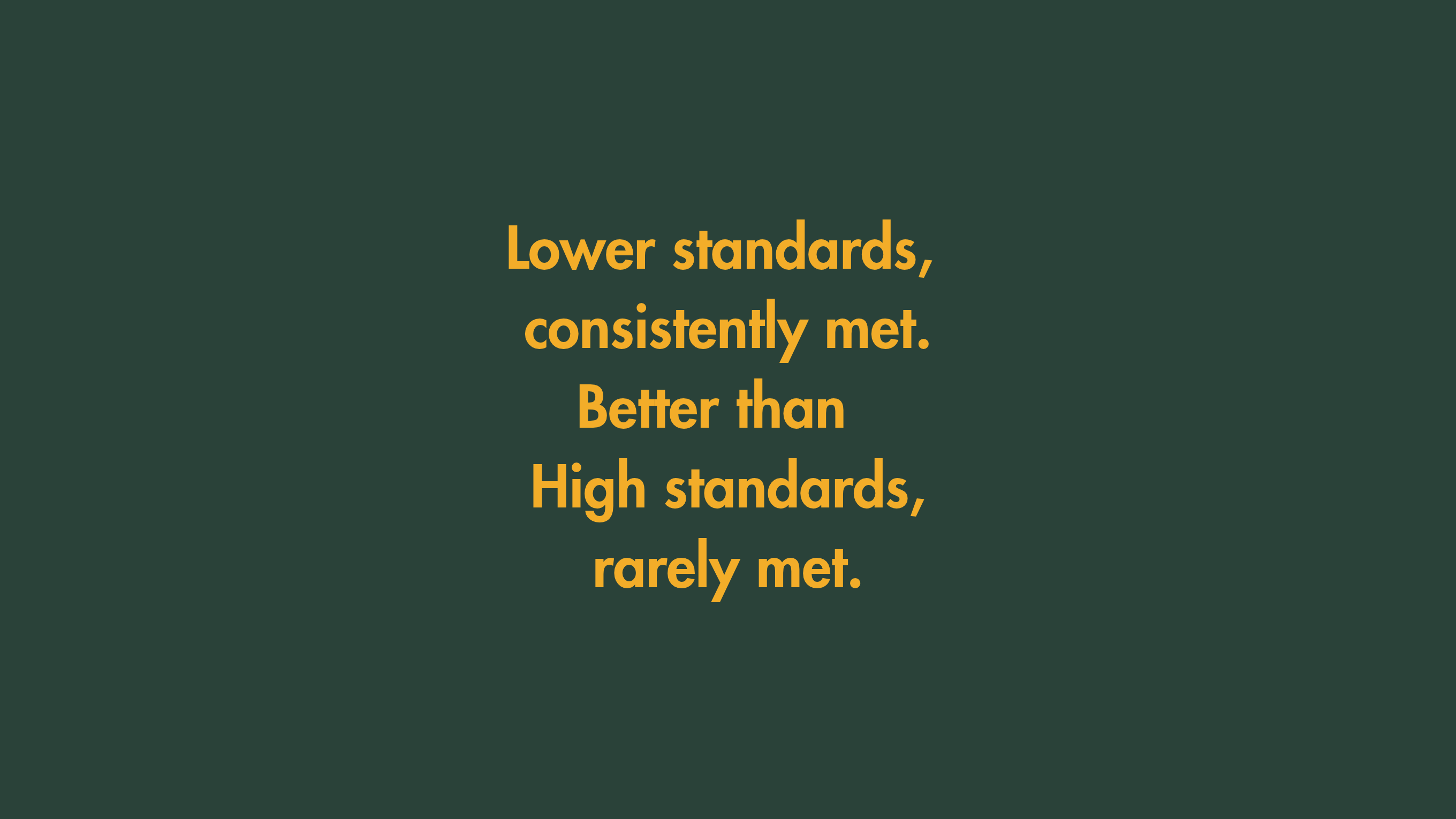
The compound effect of showing up regularly at a sustainable level overwhelms sporadic attempts at perfection.
Conclusion
Lowering your bar isn’t always giving up.
Often it’s the smartest move, the thing that transforms high-minded intentions into actual results.
High bars work when you’re already doing the thing and want to optimize it, but they fail spectacularly when they prevent you from doing it at all. In those situations, lowering the bar is strategic, not settling.
Start with laughably low standards. Maintain sustainable standards. Reach for higher standards when you have capacity, but never let the perfect bar prevent you from clearing any bar at all.
Excellence is built on a foundation of consistent effort at achievable levels. Lower the bar until it’s achievable. Then actually achieve it every day. That’s how you eventually reach the heights you’re aiming for.
Thanks for reading!
This newsletter is free, but if you’re feeling generous, you can support my work by sharing it with a friend, buying me a coffee, or checking out more on Instagram.