


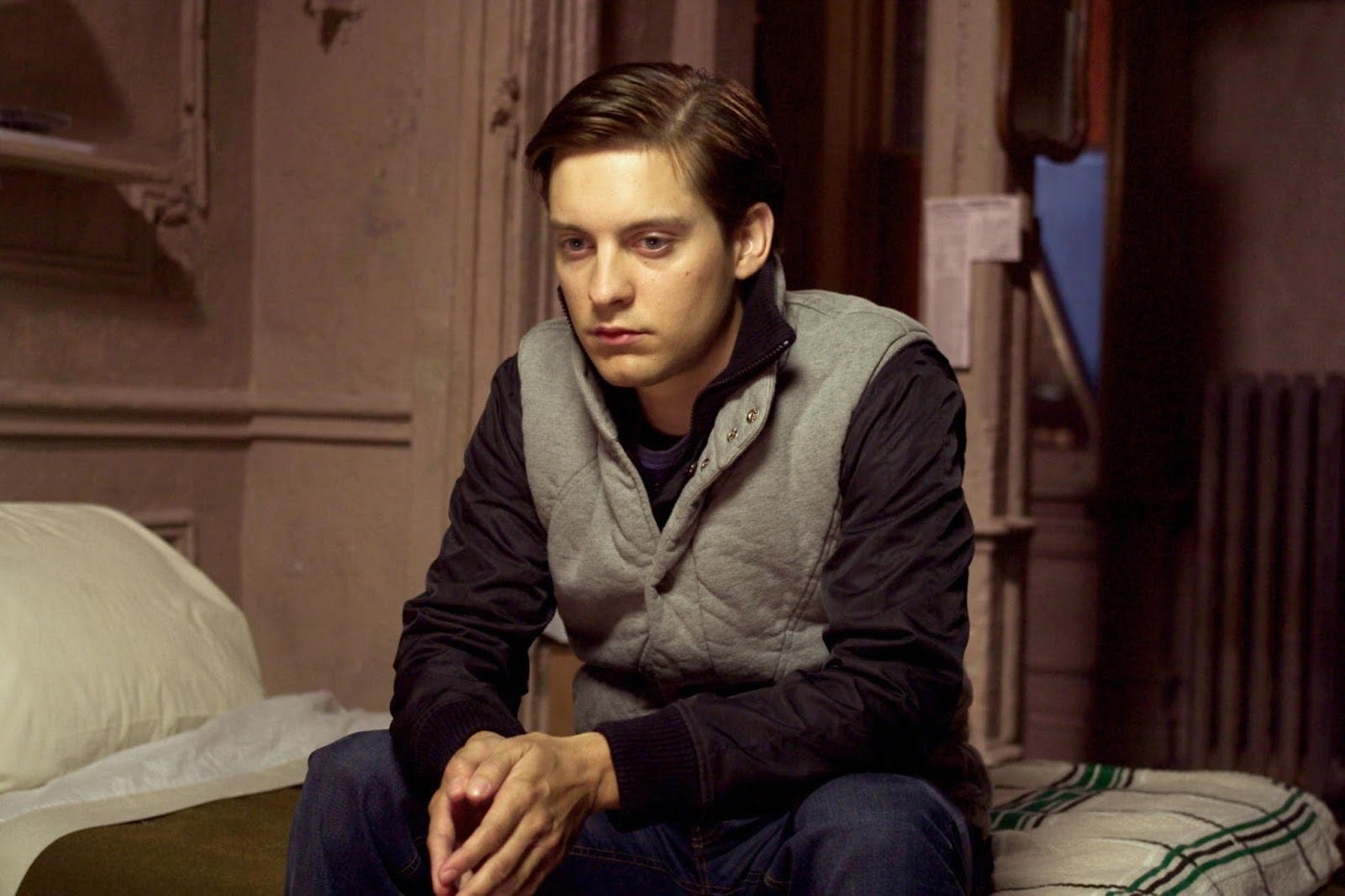
Sam Raimi’s Spider-Man 2 is often regarded as one of the greatest superhero films because it presents its hero not as an invincible figure but as a vulnerable young man struggling with the demands of responsibility.
At the center of Peter Parker’s crisis is the question, “Am I not supposed to have what I want? What do I need?”
This question captures the film’s central conflict between personal happiness and moral duty. Peter must decide whether he can live the ordinary life he desires or whether being Spider-Man requires him to sacrifice his happiness for others.
Peter’s double life comes with significant personal costs. His responsibilities as Spider-Man interfere with his education, career, friendships, and romantic life. He is frequently late for work, struggles at university, and becomes increasingly isolated from his friends.
His relationship with Mary Jane is particularly painful because he loves her but believes that being close to him will place her in danger. Meanwhile, Harry Osborn’s hatred of Spider-Man damages their friendship even further.
Every time Peter succeeds as Spider-Man, Peter Parker seems to lose something important.
The film cleverly transforms this emotional conflict into a physical one through Peter’s loss of his powers. His webs fail, his vision becomes unreliable, and he loses the ability to climb walls. These failures reflect his subconscious desire to escape the responsibilities of being Spider-Man.
His powers have always been connected to his sense of responsibility and guilt over Uncle Ben’s death. As Peter begins to question whether he can continue making sacrifices, his powers disappear, symbolizing his internal struggle.
Eventually, Peter chooses to abandon Spider-Man. Throwing his suit into a trash can, he attempts to become an ordinary person again. For a short time, this decision appears successful.
His grades improve, his relationships become easier, and he experiences the happiness he has been missing. However, Peter soon realizes that his happiness comes at a cost. He hears about people in danger and recognizes that he cannot simply ignore suffering when he can help. His decision to give up Spider-Man was never a true solution because responsibility remains part of his identity.
Aunt May’s speech about the hero within everyone helps Peter understand that heroism requires sacrifice. Being a hero does not mean that a person enjoys giving things up; it means deciding to do what is right despite the personal cost.
Peter therefore returns to his role as Spider-Man, not because he is forced to, but because he consciously accepts his responsibility.
This acceptance also prepares Peter for the moral choices he faces in later films. In Spider-Man 3, he struggles with anger, revenge, and the temptation to use his powers for his own gain.
In The Amazing Spider-Man films, Peter experiences the painful consequences of losing people he loves while continuing to protect others.
In the later Spider-Man films, particularly Spider-Man: No Way Home, his sacrifice becomes even greater as he accepts profound personal loss to prevent others from suffering. Across these appearances, Peter’s journey shows that heroism is not about avoiding pain but accepting it when necessary.
Spider-Man 2 establishes this principle most clearly: Peter cannot have everything he wants, but he can choose what he believes is right. His greatest strength is therefore not his superhuman ability but his willingness to sacrifice his happiness for the lives of others.
Thanks for reading!
This newsletter is free, but if you’re feeling generous, you can support my work by sharing it with a friend, buying me a coffee, or checking out more on Twitter and Instagram.